Our trip to Uganda started with a bang, literally. Tom and a rather large backpack were sent flying down the aisle of the coach into the lap of another passenger, as the coach came to an abrupt stop in Jinja, Uganda. Awkward apologies given, we were dropped on a roadside in the dark. We could see only the bright lights of an African-restaurant chain. Hungry, we took shelter in the restaurant, ate what we now call “Muzungo (foreigner) food” and called a cab to take us to Explorers River Camp where we arrived late at night.
We tried to get as much sleep as possible as we needed optimum energy levels for our rafting trip the next day. Jinja is the famed source of the River Nile and also therefore source of some Grade 5 mega-rapids. Although some river re-engineering through damming has taken out a large number of rapids, we still had a spectacular day. We felt in safe hands with Juma, our guide, who kayaked for Team Uganda in the London 2012 Olympics. We tasted Nile Water quickly into our rafting trip as our entry point into the river (and our boat) was through a 20 metre speed-slide, as demonstrated by Tom.
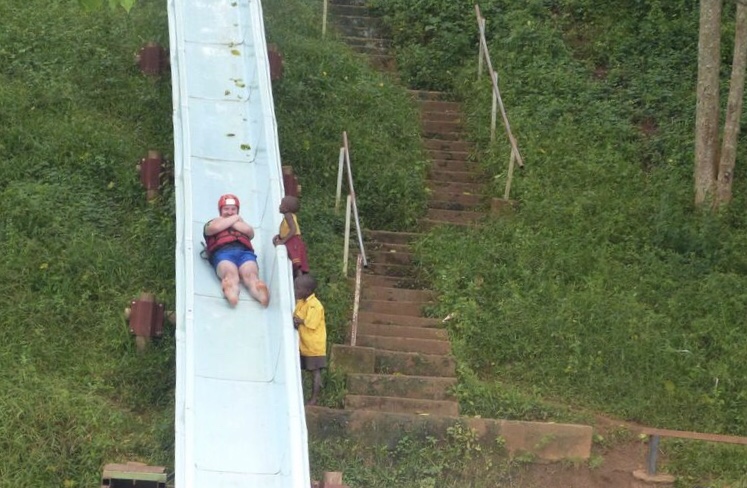
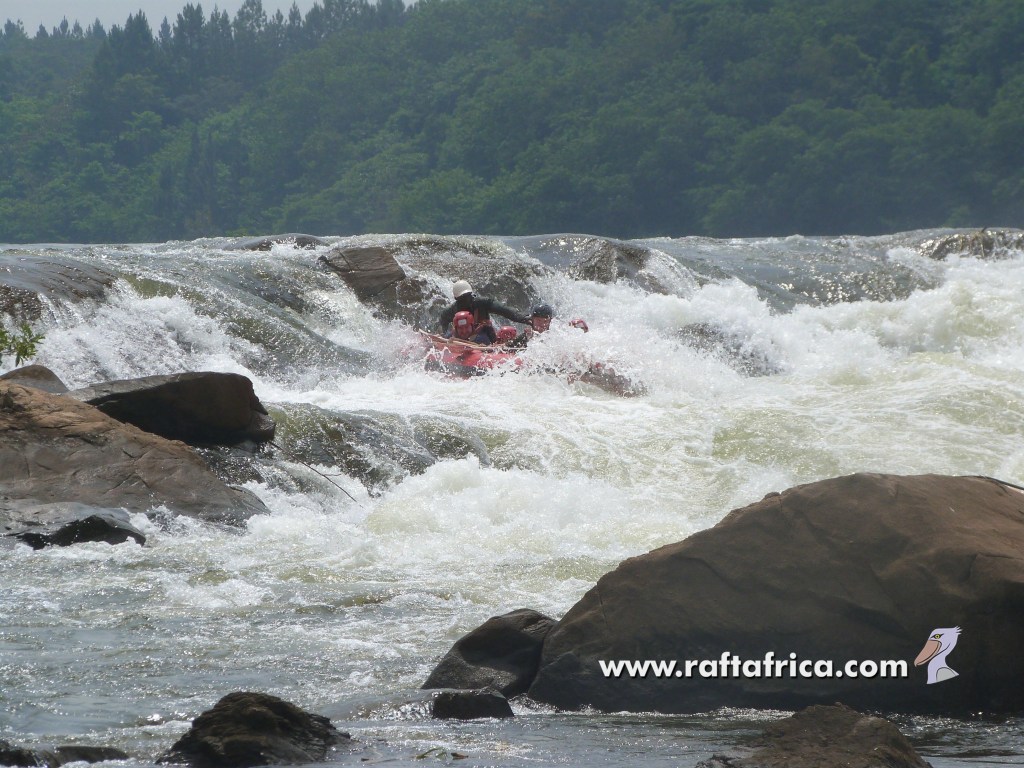
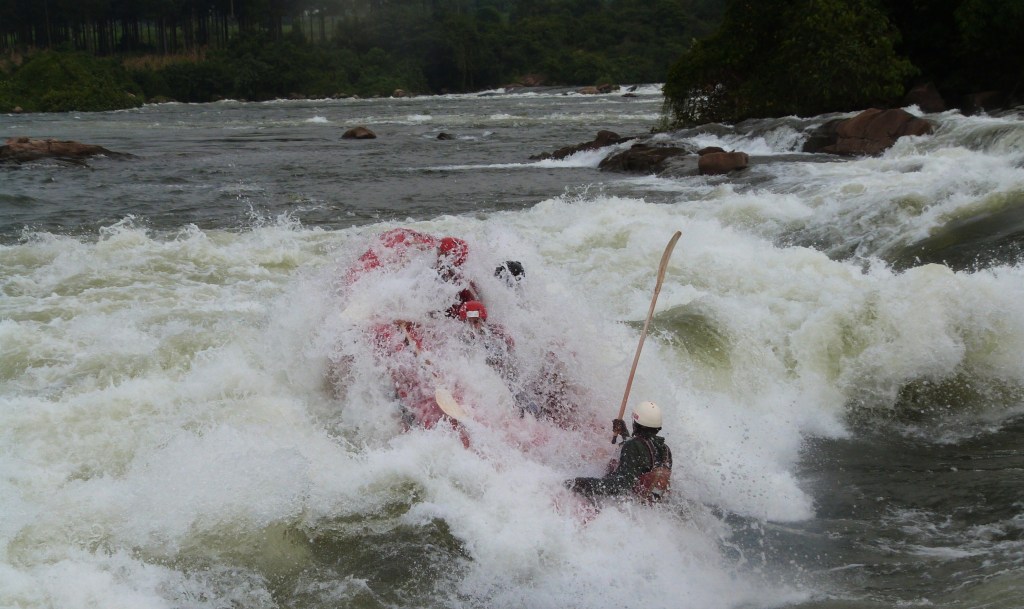
After a very quick safety briefing and demonstration of how not to paddle, our group pushed our way down the Nile, laughing at Juma’s many jokes. Our first rapid was a Grade 5 – defined as “extremely long, obstructed and/or very violent.” This was somewhat an exhilarating baptism of fire into the world of rafting.
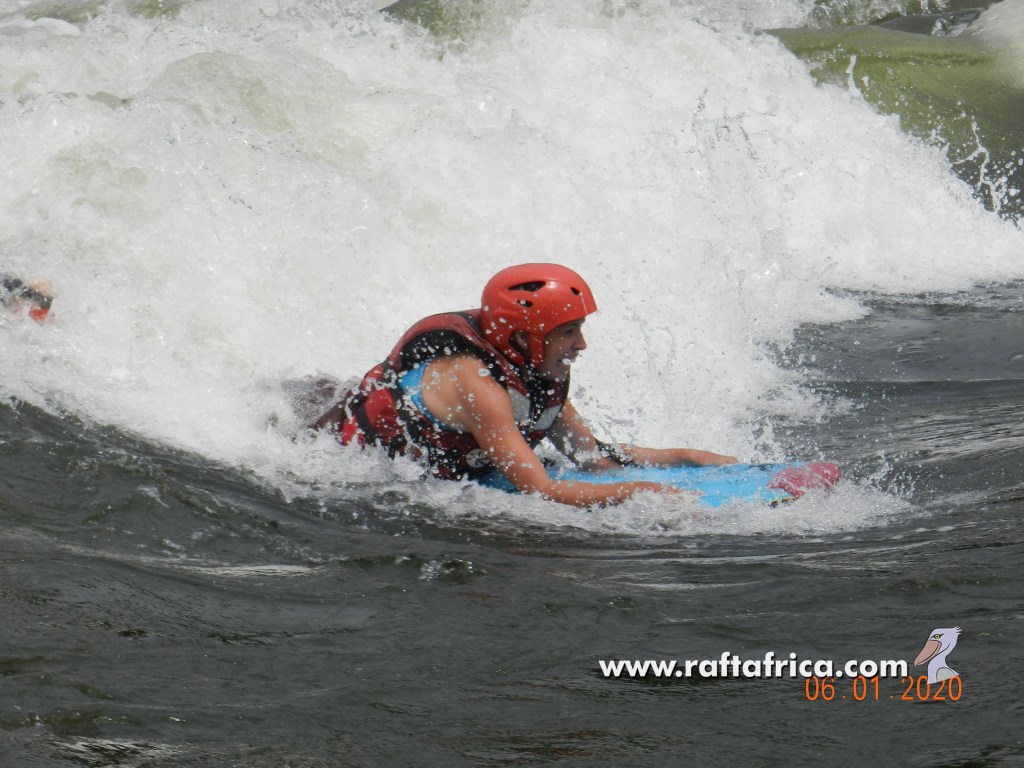
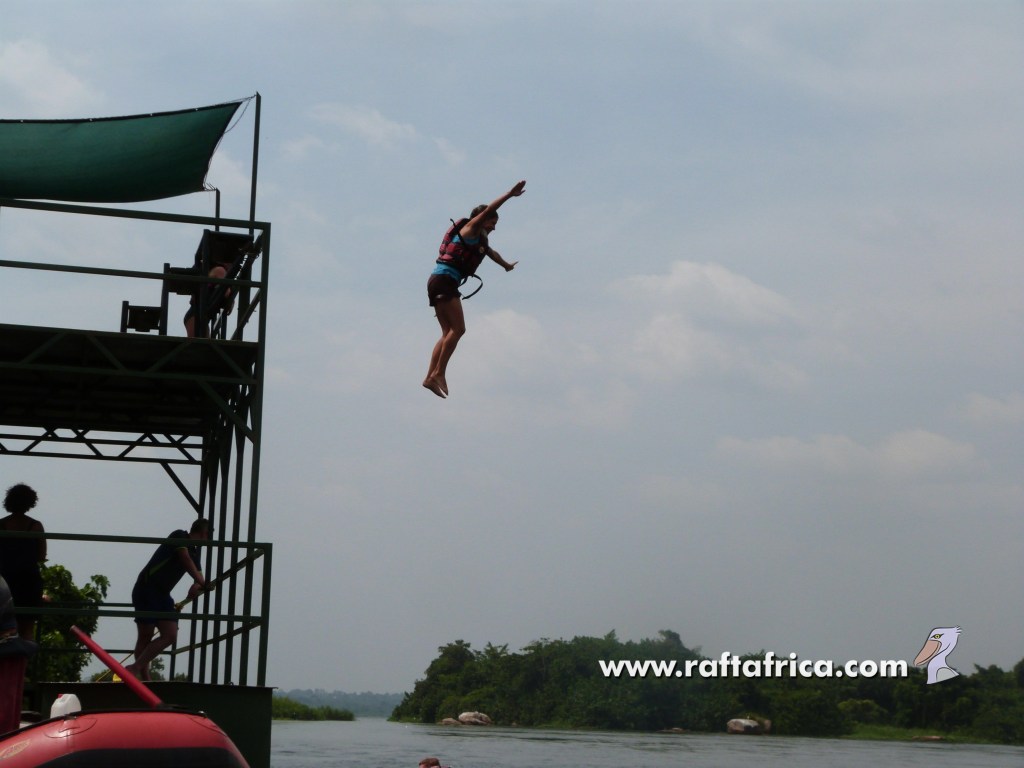
After a few rapids where miraculously we managed to stay afloat, we tried riding a natural “Playwave” on a body board. This time, falling off was inevitable although Kelsey managed to keep afloat longer than Tom and seemingly enjoyed it more based on the pictures below.
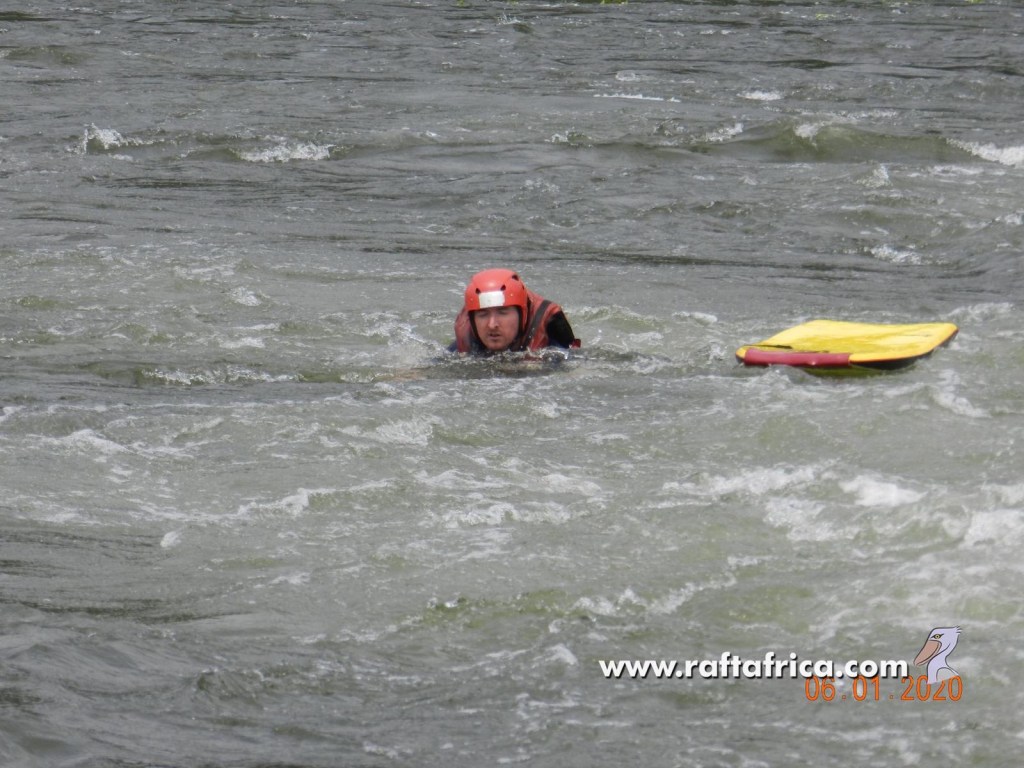
Post lunch and jumping into the Nile, we retreated back to the relatively safe space of our boat, with our boat team and Juma. On our final rapids, we experienced our first boat flip as one of the rapids finally got the better of us. It was bound to happen. We loaded ourselves with far too much Nile water than we cared for and were sent floating fast from the swell down to a group of Safety Kayakers who were thankfully waiting for us downstream.
Back on board, with heartbeats back within normal range, we meandered our way down stream with our final rapid of the day done. We had well earned beers with our boat crew on the bus en-route back to our hostel, where we settled in for the evening.
Naturally, we stayed on dry land the following day, drank tasty Ugandan coffee (instead of Nile water) and had some massages overlooking the river. We explored the local food huts, learning that a ‘Rolex’ in Uganda is not an incredibly expensive watch, but instead a chapati and omelette rolled up together. This became a new breakfast treat. It turned out that this uber relaxed morning was a good thing, as on our trip to Kampala we experienced traffic on par with our experiences in Dar-Es-Salaam. We could dwell on the traffic, or the live chickens we saw strapped uncaged on the top of a minibus, but the saving grace was that the countryside surroundings were idyllic and our next camp, Via Via Entebbe, was probably one of our favourite places so far.
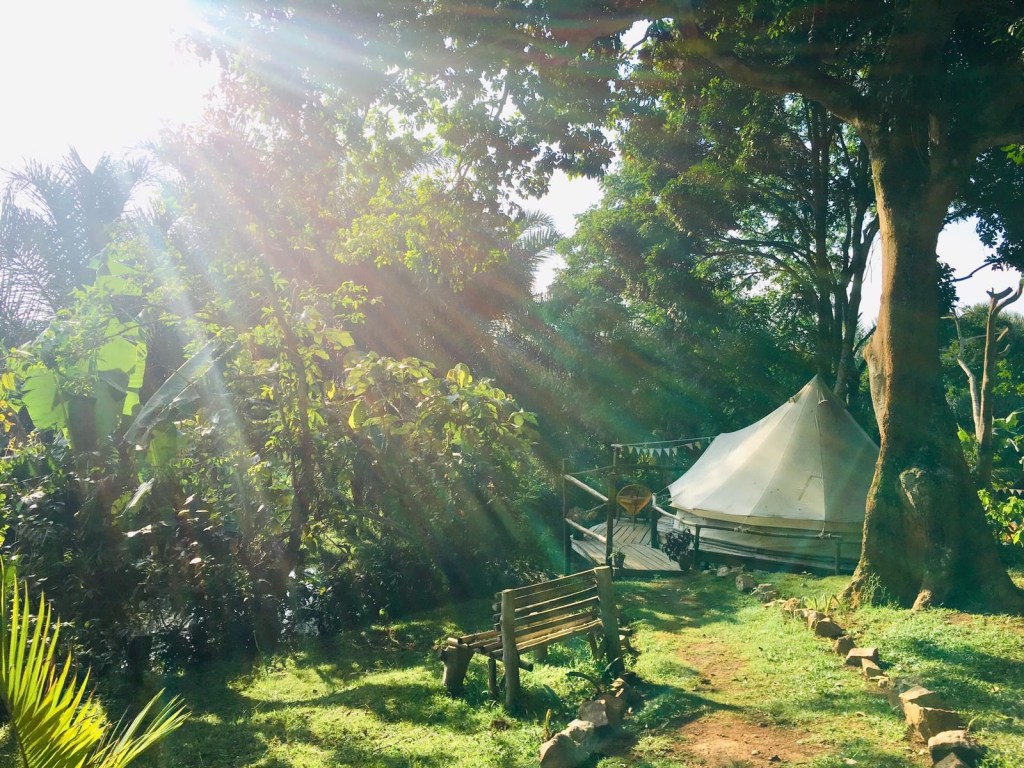
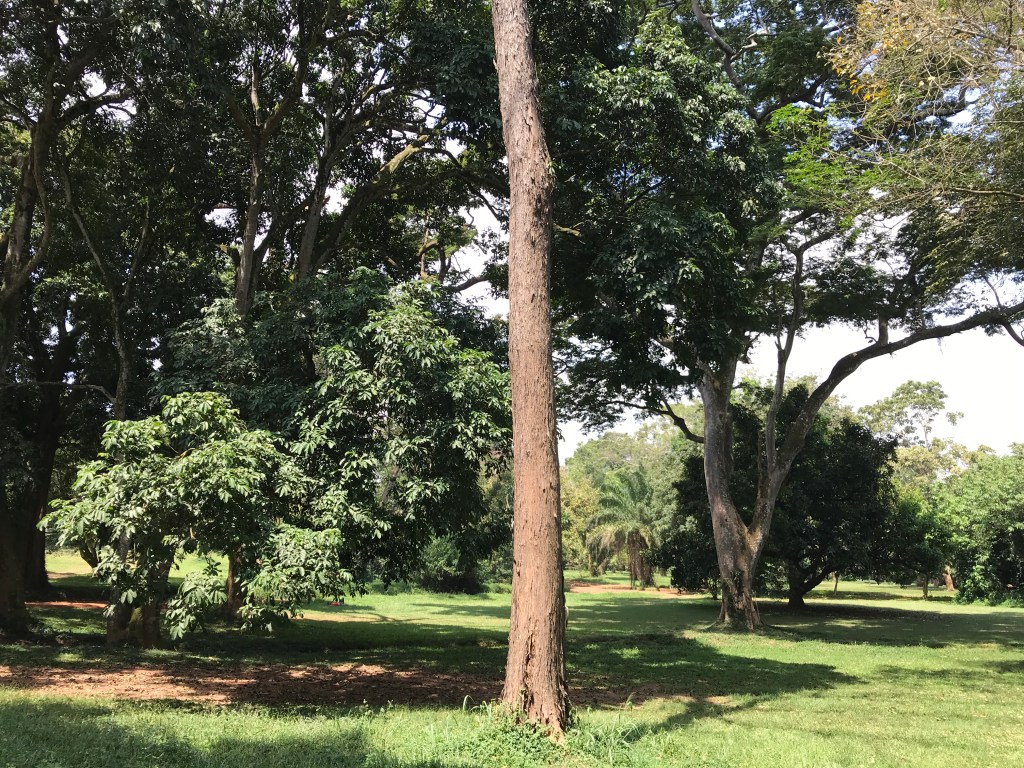
Via Via redefined “Glamping” for us, with scented tents on a hillside overlooking a lake filled with birds. We were the definition of leisurely here, walking around the town of Entebbe, visiting the Botantical Gardens on the shores of Lake Victoria and powering through some reading. As per our “new normal” in every African country, we spent more time than we wished in a phone shop, trying to navigate the convoluted process of buying a Sim Card. We rewarded ourselves this time with ice cream to numb the pain.
Although we could have stayed many days longer at Via Via, it was time for us to leave, travelling north west to Queen Elizabeth National Park. This meant it was time for another bus or two, accompanied by yet another set of African music videos. By now, we were becoming experts at recognising the likes of Diamond Platnumz, Harmonize and Nandy – big hitters in Afrobeats, 2019. Although we couldn’t understand most of the lyrics, we spent our time trying to interpret the stories behind the videos, taking it in turns to explain our interpretation of the video to the other. We’ll probably never know if we were successful, but it helped pass the many hours.
We finally reached Kasese after one of our longest and hottest bus days, taking a taxi – without music videos – to Bush Camp, our home for the next few nights. Bush Camp was situated along the Kazinga Channel in the National Park, connecting two large African lakes, Lake George and Lake Edward. The channel which is 32km long is also home to one of one of the largest concentrations of hippos in the world and many crocodiles.
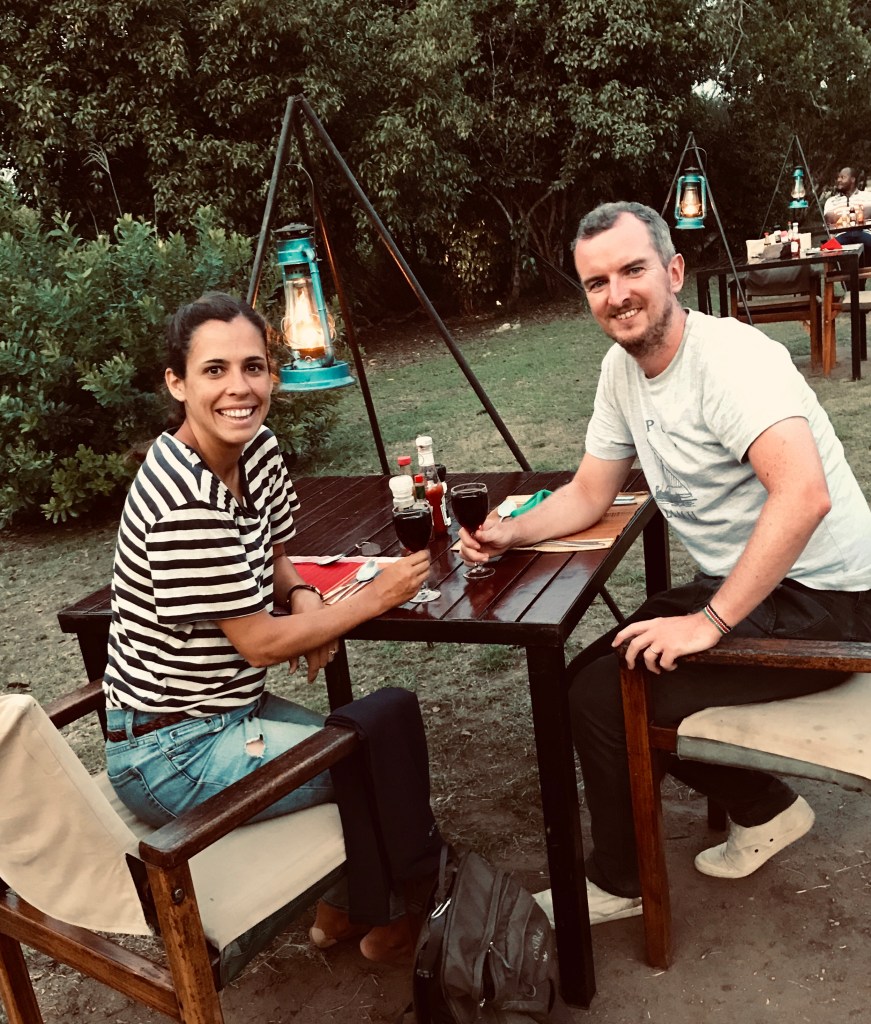
At night, after four course dinners around the campfire, guards escorted us back to our tents, in case we met any hippo friends on the way back. Although we thought this may be a little excessive on night one – as there were no hippos in sight – night two proved to us exactly why this was needed. Minutes before sleep, we could hear the chomping and teeth grinds of a female hippo pulling off large strands of grass literally metres from our tent. We lay in our bed, covers up to eyes, as we watched and heard this very hungry hippo slowly move around our tent for over an hour, pulling off the best bits of grass she could find. There are no pictures to prove this unfortunately, but the memory will live with us.
When there has been an opportunity to visit a hospital on our trip so far, we’ve taken it. Bush Camp was near Kagando Hospital, a place where Tom’s work colleague, Dr. Chris Harris (Consultant Neonatologist, King’s College) spends some of his time each year supporting the team. Chris kindly introduced us to Dr. Mary Munyagwa, Medical Director for Kagando Hospital and a Consultant Paediatrician. We took our first trip on a Boda-Boda (motorbike) through the Ugandan hills to reach Kagando. Mary took us on a tour of the whole hospital site, talked us through how the Ugandan healthcare system worked and all of the projects ongoing. This place was brimming with innovation, especially with ideas about how to better fund its services with the support of the local community. It clearly plays such a pivotal role to the people of Kagando and has a very bright future ahead.
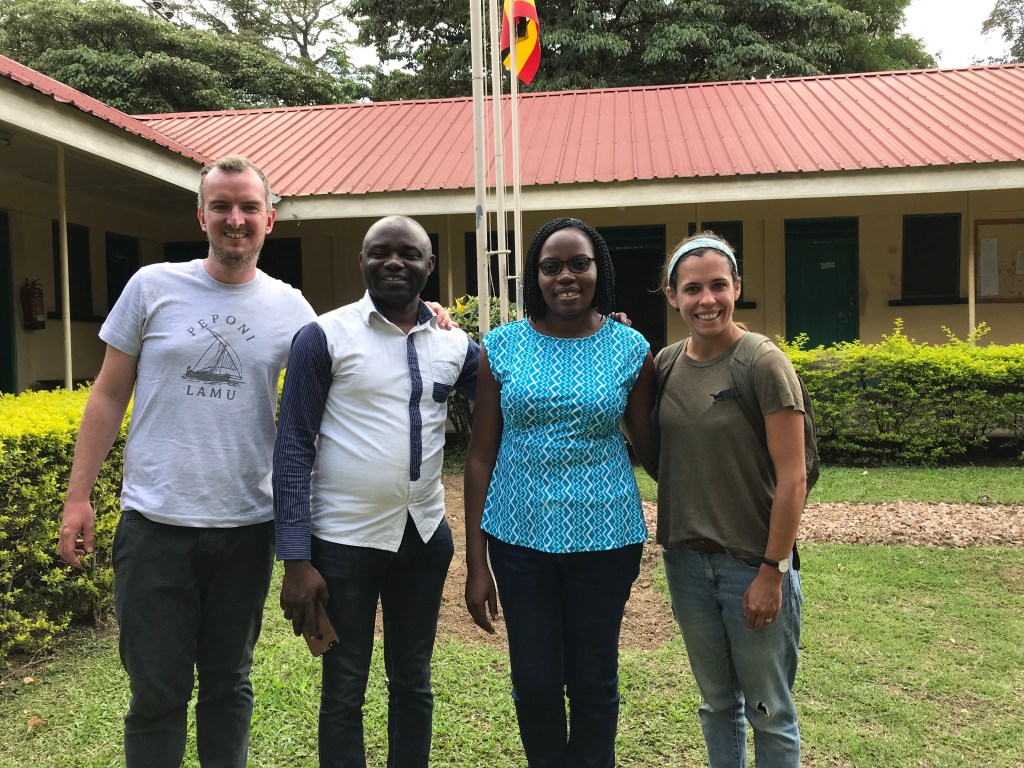
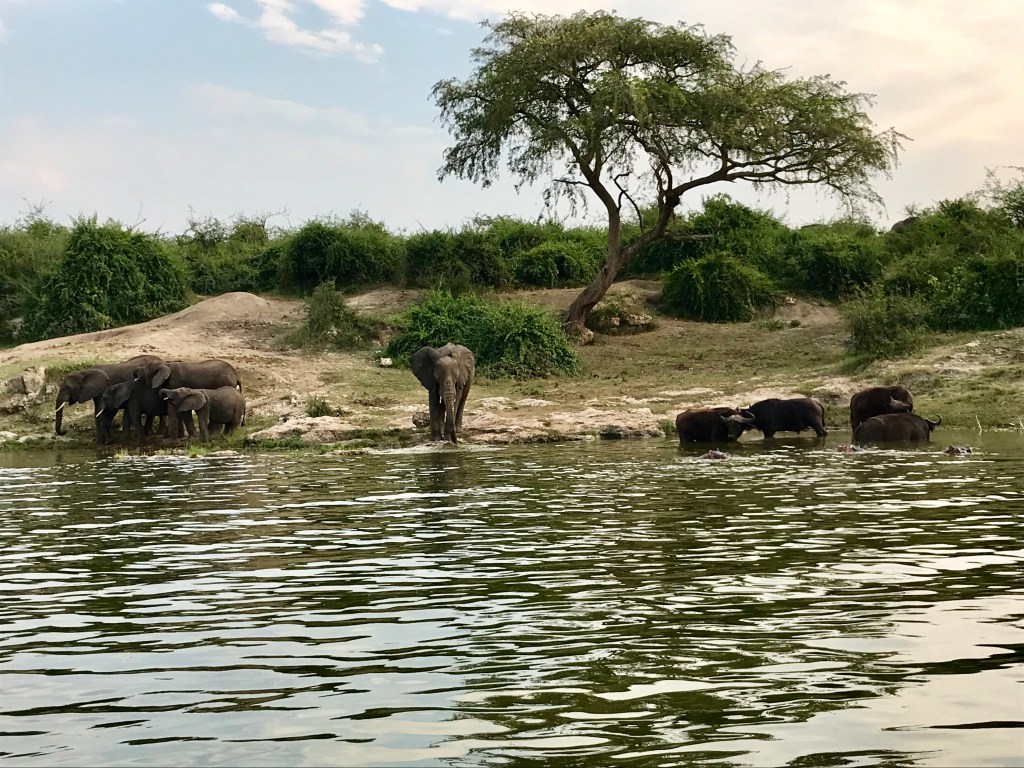
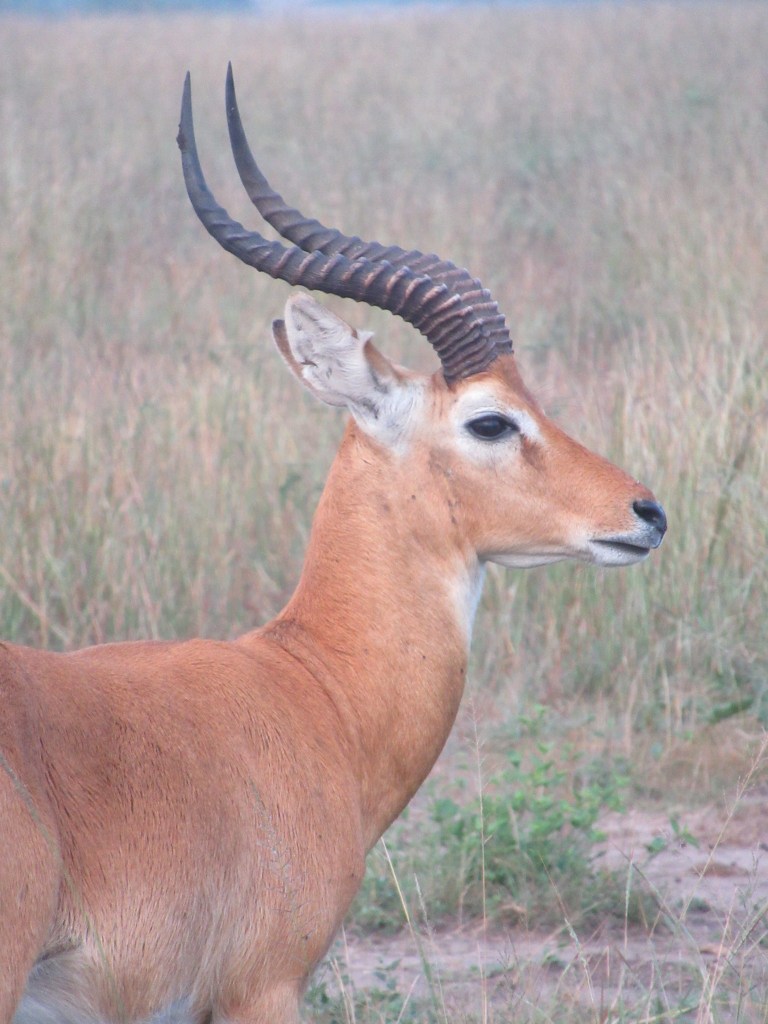
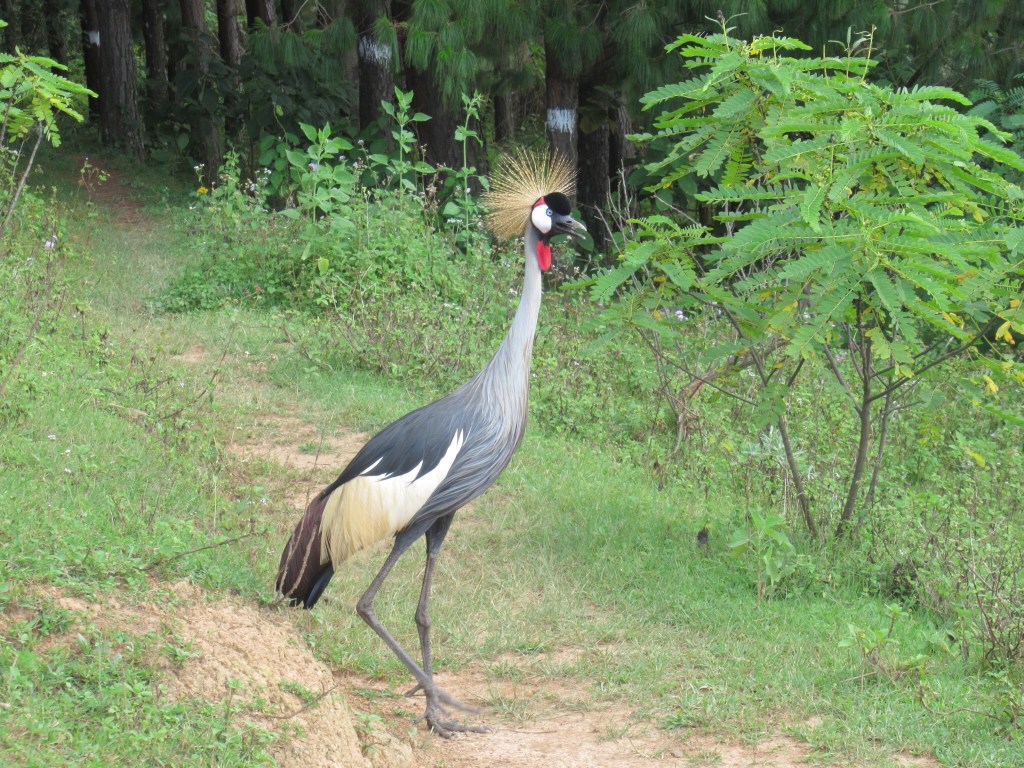
Aside from visiting hospitals, the remainder of our time in QE was spent searching for animals. Although sadly we didn’t find any lions, we saw a copious amount of hippos, families of elephants (including babies), buffalo, roebuck and tremendous numbers of birds, including Uganda’s National Bird, the Crested Crane. The river safari along the Kazinga Channel was a real highlight, watching the animals quietly appear through the trees before splashing in the water.
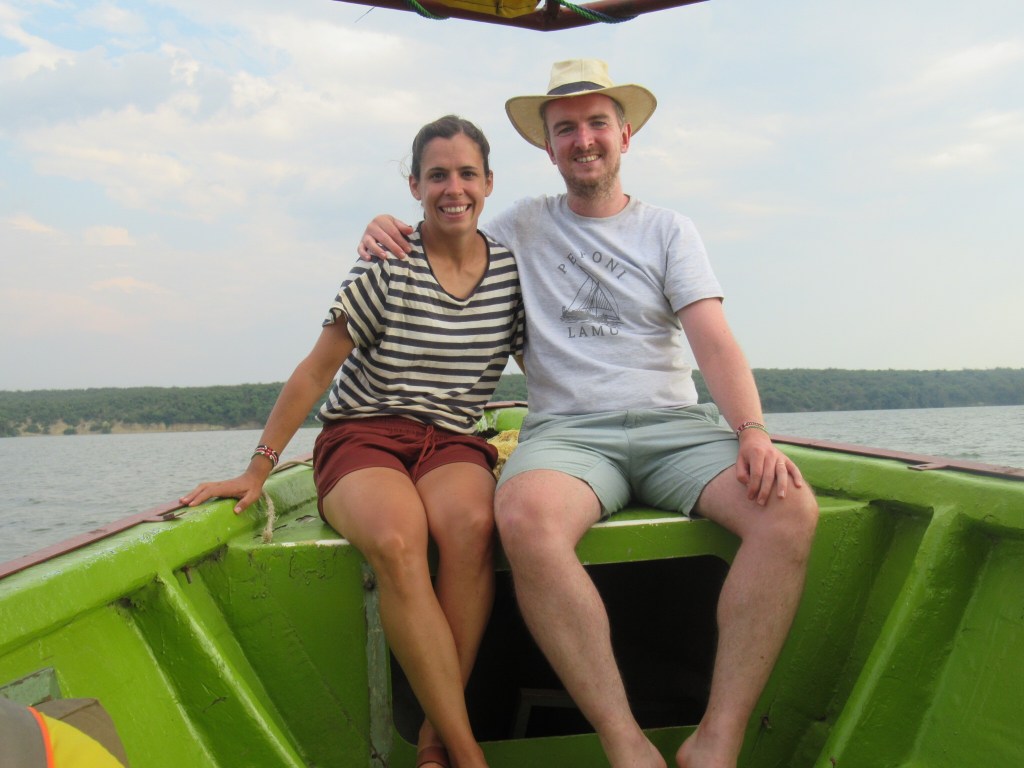
Continuing the Uganda water theme we seemed to have established, our next and final stop was to Lake Bunyoni. Lake Bunyoni in the south west of the country has 29 islands of all different shapes and sizes, dotted across the water. After taking a taxi to one of the island docks, we hopped into a dugout canoe, made from a eucalyptus tree. With the help of a strong armed canoer, we rowed ourselves around 4km to Byoona Amagara, perched on one of the islands. We stayed in a Geodome, an open faced, straw-roofed hut overlooking the lake. Byoona Amagara is a strong contender for “best view we have woken up to.”
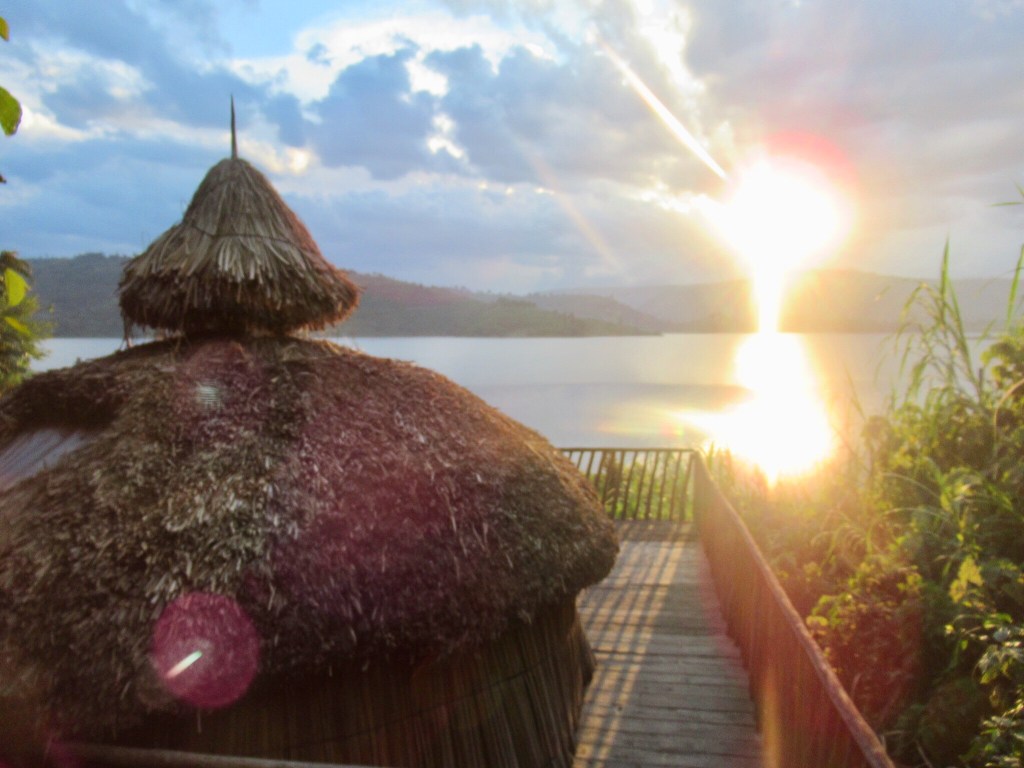
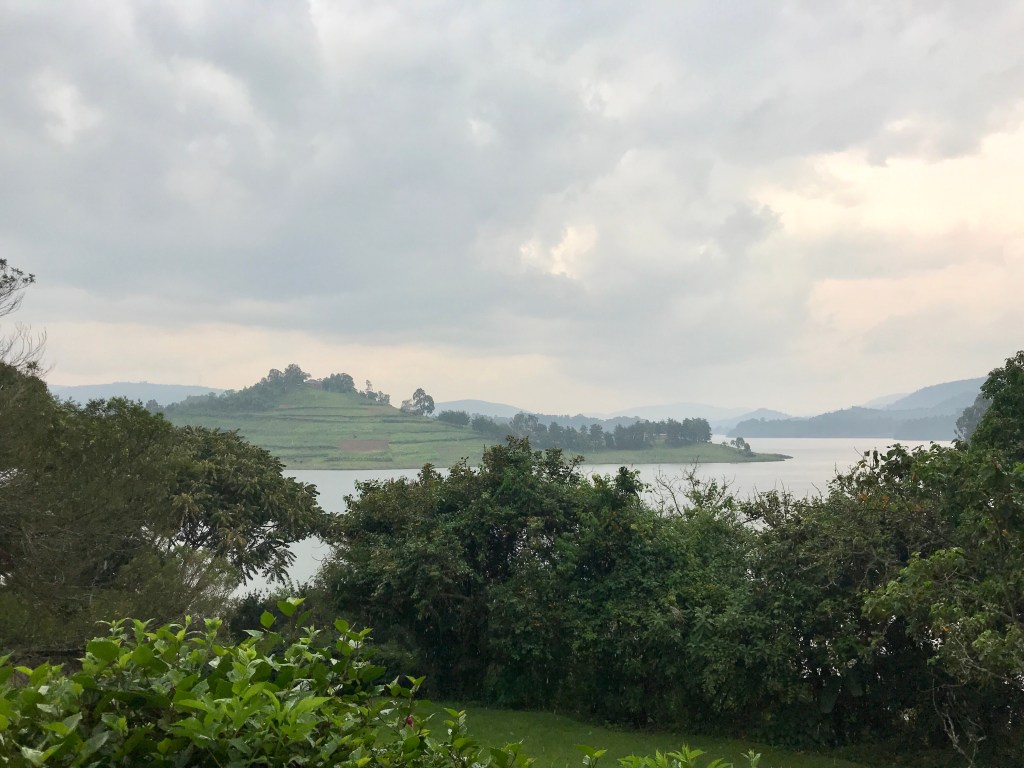
We spent our time swimming in the lake, walking and canoeing around the islands. Our excitement was high as this lake was crocodile, hippo and water-borne disease free and so we made the most of it. We took a guided canoe trip around the islands, mainly to avoid the widely famed “Muzungo Corkscrew” – this is where white people / foreigners (Muzungo) end up going around in circles in their canoes, struggling to figure out where they are on the lake. The help of our guide meant we visited Bwama Island – reputable for hosting leper’s at the height of the leprosy scourge in the 1940s – and Punishment Island – a place where pregnant women out of wedlock were banished. We learnt from our guide that his own great-grandmother was a Punishment Island survivor, as he explained to us how the practice started and thankfully ended.
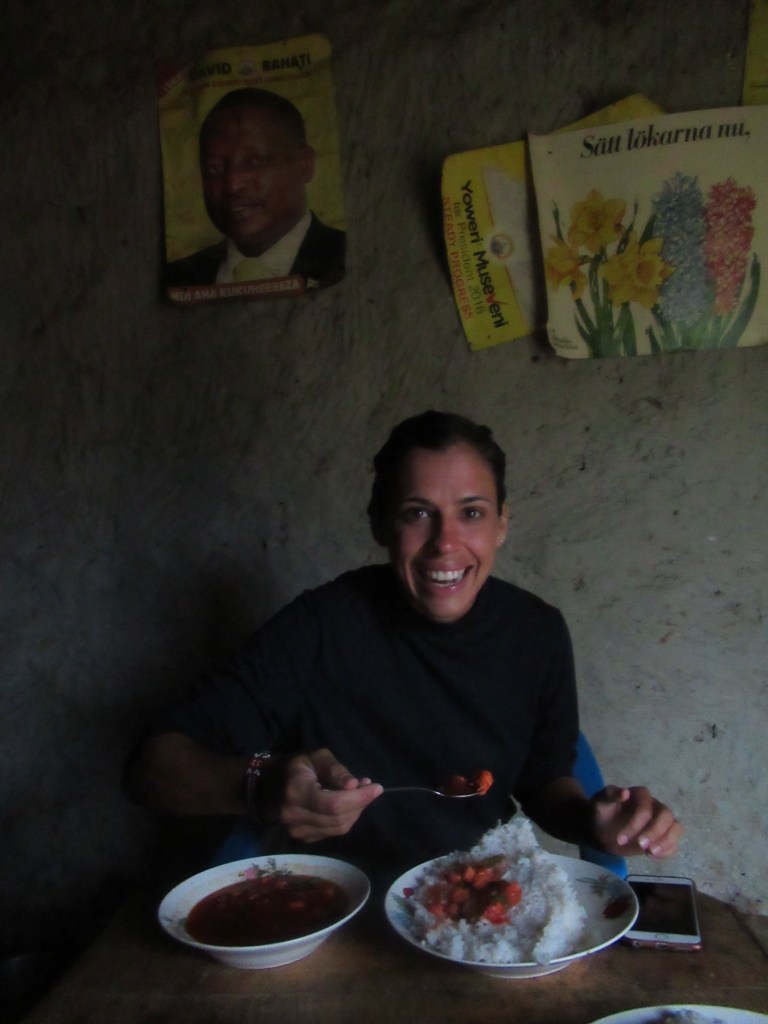
Our friends Jessica and Tim told us that we should look out for a “man named John who catches crayfish” around Byoona. Sure enough, on our very first morning walk, we met John who had been catching crayfish that morning. We took him up on his offer to cook for us and we had delicious crayfish in his home, with his family, as the rain set in outside.
Our final day in Uganda was momentous as it included our final African border crossing and final African long haul bus. The bus didn’t disappoint and we had more Diamond Platnumz as our soundtrack for our journey into Rwanda and a meet up with Kelsey’s parents.

 The wondering wanderers