Our first stop in Kenya was to Diani Beach, an hour south of Mombasa. Unlike other journeys, this one went without a hitch. Our bus made no unscheduled stops 😲. We had reserved seats 😯. There were no distracting beeping sounds 🤗. It felt like luxury. As we arrived into Kenya however, we weren’t the most popular people in the border office as the coach driver pulled us both right to the front of the immigration queue, in front of over 100 patiently waiting people. We were those annoying travellers who needed a complex visa with a driver who wanted to make a speedy exit. Sooner than we anticipated, we became the proud owners of an East African Visa – allowing us entry to Kenya, Uganda and Rwanda.
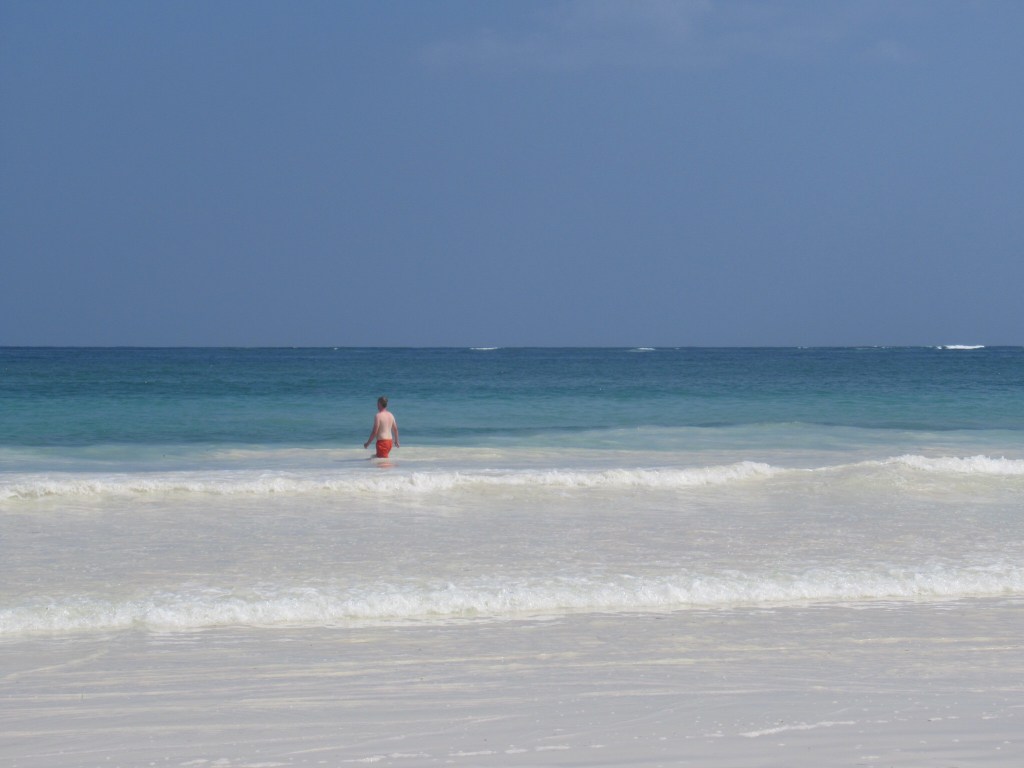
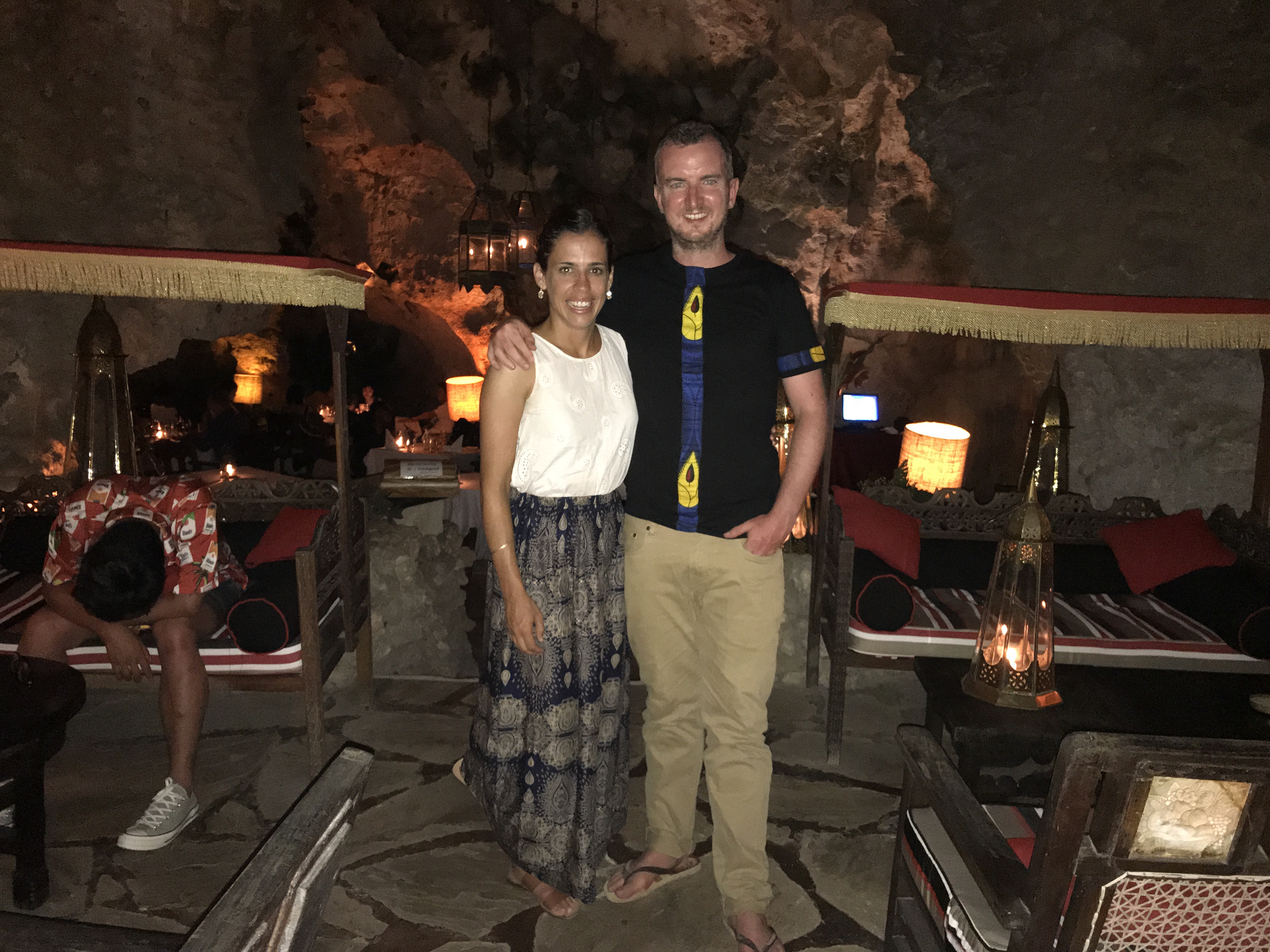
Our driver dropped us on a roadside just outside Diani Beach and we Tuk-tuk’ed down to Masai Paradise Cottages – our home for the next couple of nights. Our home was a little shabbier than the pictures on booking.com looked and we didn’t have any hot water. We were told the water was simply “not working today.” It became clear however that hot water wasn’t working any of the days as the bathroom didn’t have a hot water tap installed 🤷♂️🤷🏻♀️. Our host guaranteed us however that we would have hot water tomorrow. We remained sceptical. Credit where it’s due, the very next day, we arrived back to find workmen in our room who were installing very very hot water, but with cold water taken away. 🤷♂️🤷🏻♀️. Water problems aside, we spent most of our time swimming, walking and eating tasty food on the beach. Our main challenge was trying to keep our food out of grasp of a brazen group of cheeky monkeys. We began to get into the festive spirit as families and groups of friends began to descend on the beach for Christmas cheer. To kick off our own festive cheer, we ate dinner in a cave – Ali Barbour’s Cave Restaurant – a real highlight of Diani.
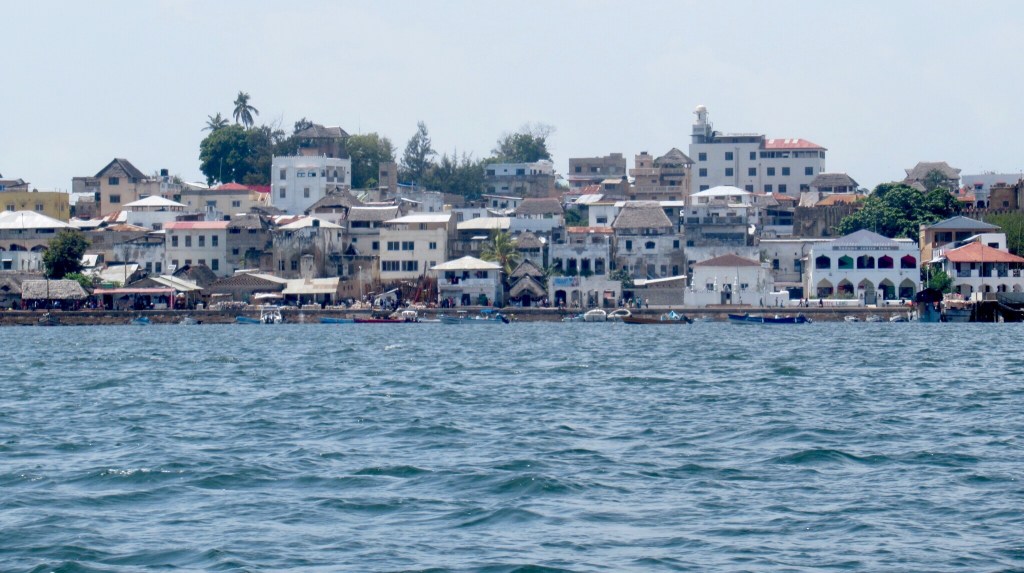
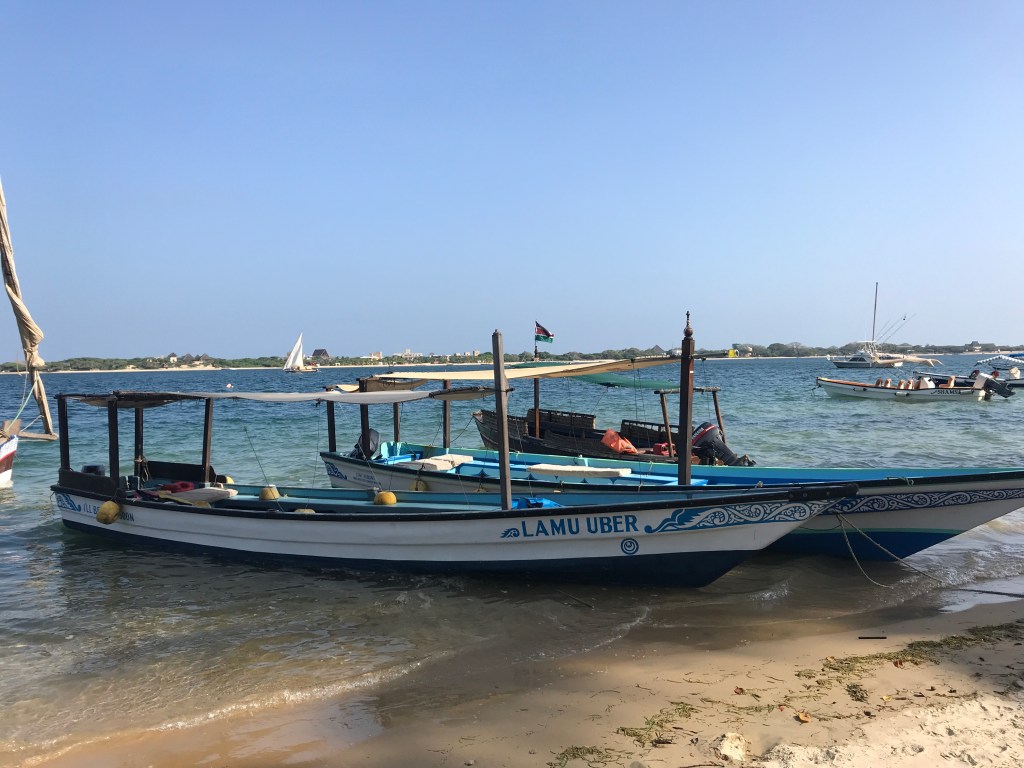
Our next stop was to the highly-anticipated Lamu Island, a quick flight from Mombasa Airport. We arrived at Manda Airport on a small propeller plane, where a boat was waiting for us to take us to Shela, situated at one corner of Lamu. Our boat, named Taylor Swift, was Lamu’s equivalent of the Heathrow Express. On the Taylor Swift, we passed by Beyoncé and Lady Gaga too as we bounced our way across the ocean looking at lines of hilltop white houses and slow walking donkeys on the shore. After a short walk through cobbled streets, passing yet more donkeys, we arrived at our whitewashed AirBnB – Shela Island Hotel.
We had the top two floors of a tower, with a beautiful view of the intricate maze below. It even had a hammock and a choice of four different beds. Space was not an issue in this place. Within a couple of hours, we’d had our first taste of Swahili curry and prawns, had a Christmas Eve drink at Peponi Hotel and had already vowed to return again. We realised at about 6pm on Christmas Eve that we hadn’t bought any Christmas presents for each other. We gave ourselves a 45 minute deadline and a $20 budget to find gifts. This Supermarket Sweep style of last minute Christmas shopping was the most pleasant either of us had ever experienced, beating Oxford Street, Stoneridge Mall and Coventry City Centre by a mile.
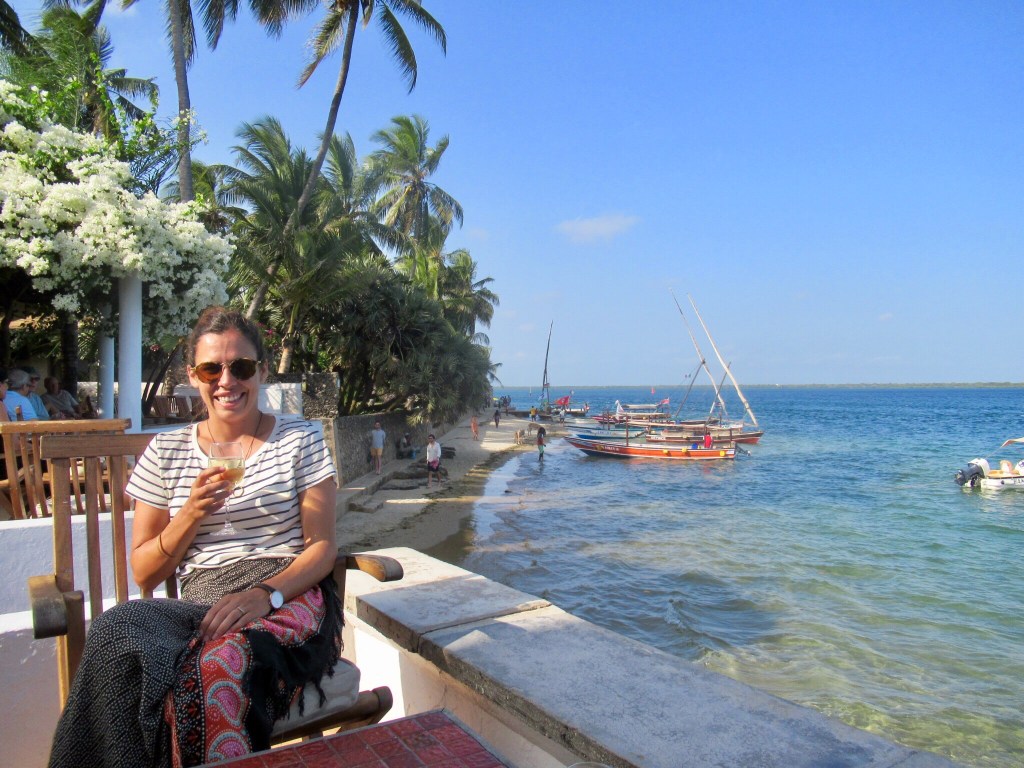
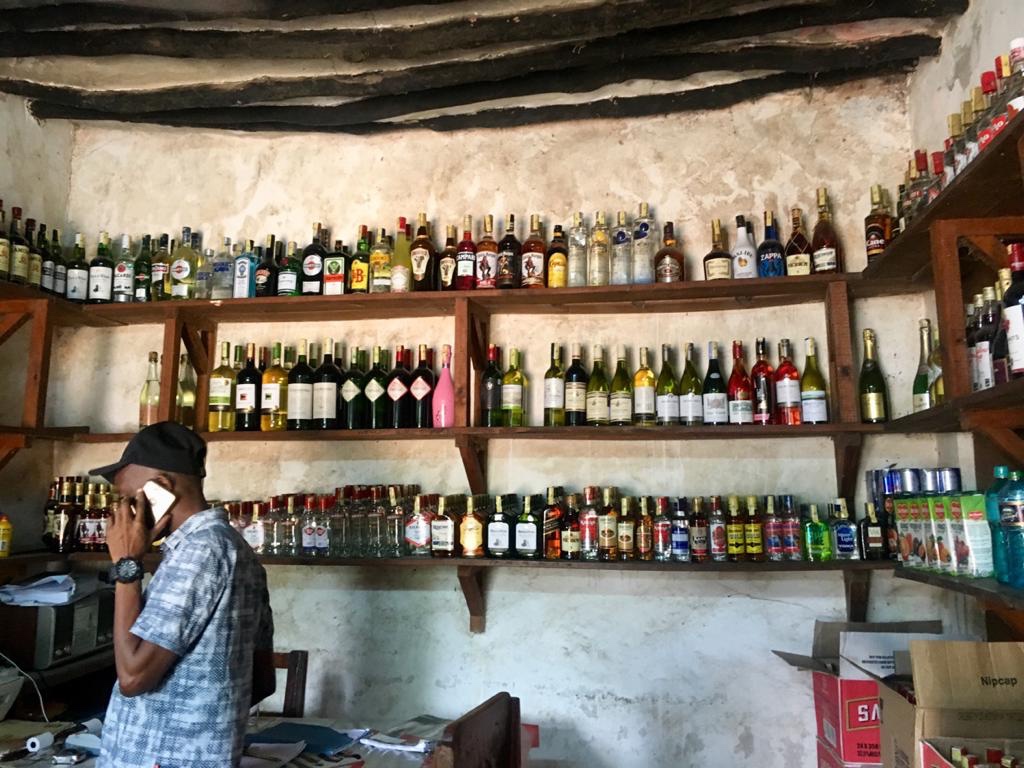
After exchanging hastily bought gifts, a priority for Christmas Day was to find ourselves a bottle of wine. This was no mean feat on an island where the public sale of alcohol is virtually banned. After some googling, we found out that alcohol purchases were only available in the police station. Following the blue dot on our map to Lamu Town, we arrived at a police compound with a series of huts. One of these huts had a surprisingly wide selection of spirits, wine and beer, neatly arranged in size order. Without a corkscrew, we found the best screw top bottle of red wine we could find along with a bottle of local gin.
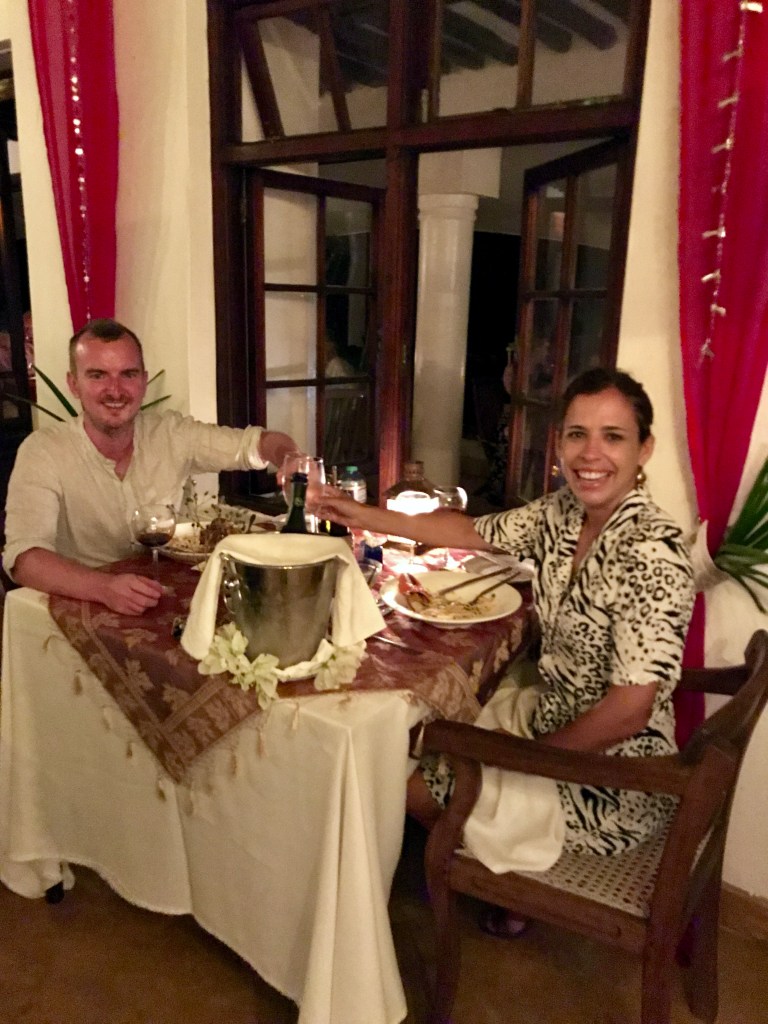
With wine successfully bagged and after a meander around the laid-back Lamu Town, we had a beach walk, a Margareita (why not?) and prepared for our Christmas Dinner at Peponi Hotel. Although no pigs and blankets in sight, we had a wonderful meal, with Kelsey declaring her sushi as “heavenly.” Our friends Natalia and Nick had even sent us a Christmas present of a bottle of wine, brought to our table as a surprise mid meal.
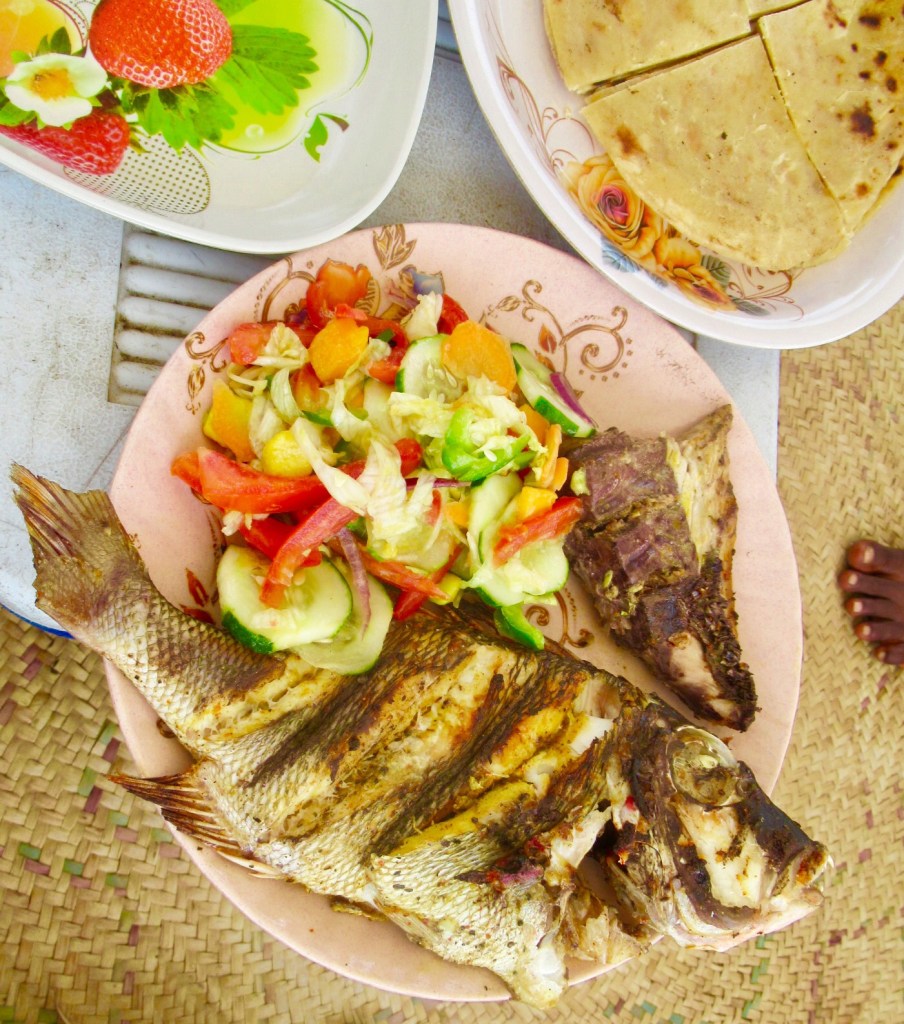
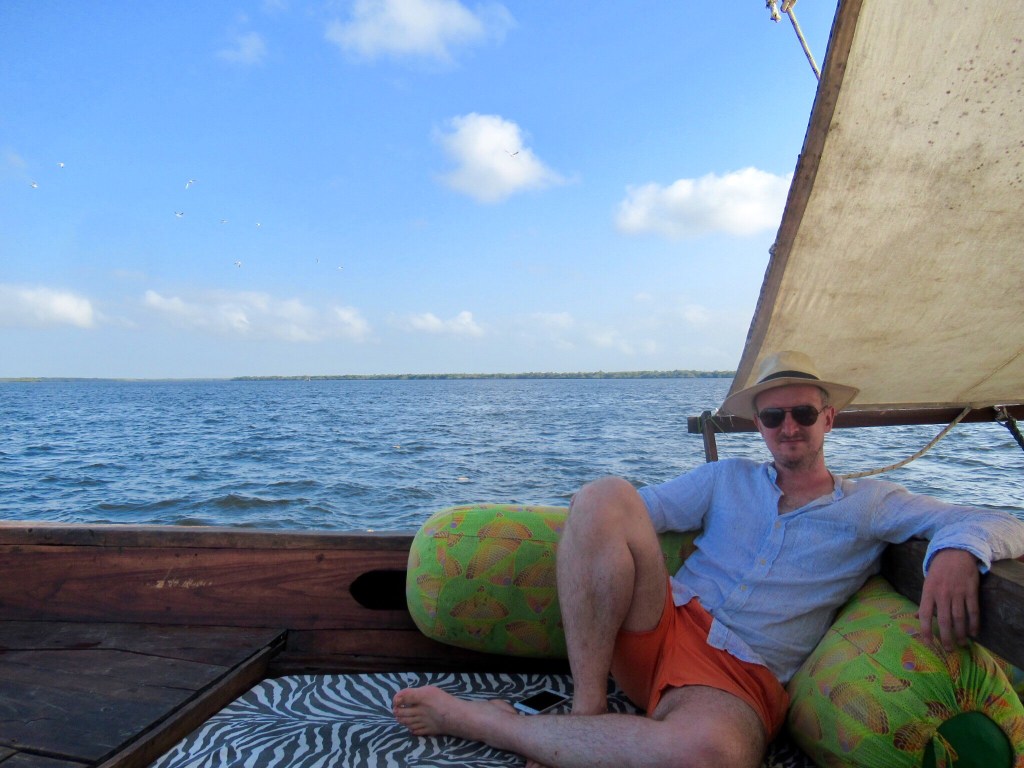
As well as its donkeys, Lamu is famed for its majestic Dhows. No Lamu trip would be complete without a sail on one and so we took a trip out on the water on Boxing Day. Tom’s skin and sun don’t go together too well and the thought of a day in the blitzing sun on the ocean unnerved him so much that he took a sheet from one of the four beds to wrap around him on the boat for prospective cover. Bag packed, complete with bedsheet, we were sailed to a beach on Manatoto, where we swam and snorkelled. We watched too as our guides caught our lunch – a mammoth fish – fresh from the water. This was expertly cooked on a coal fire on the Dhow. We later discovered that it’s not uncommon to catch fish in excess of 100kg around Lamu Island which was fairly mind blowing to two fishing novices. You will be pleased to know that sunblock sufficed and the bedsheet was not needed, staying in the bag.
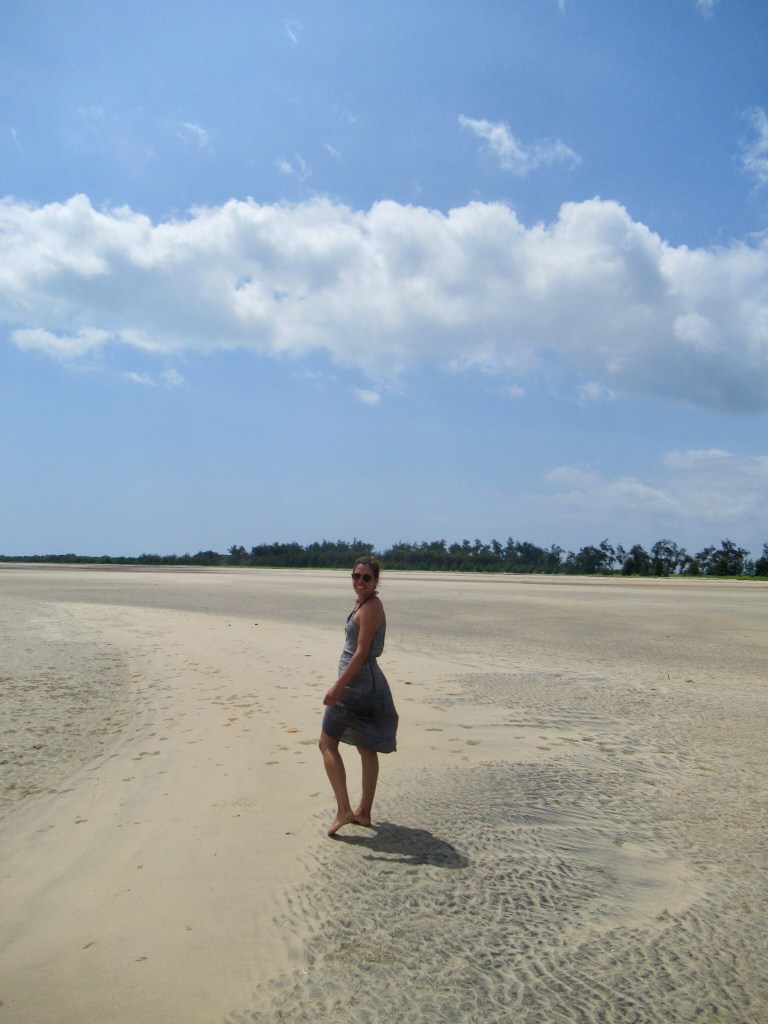
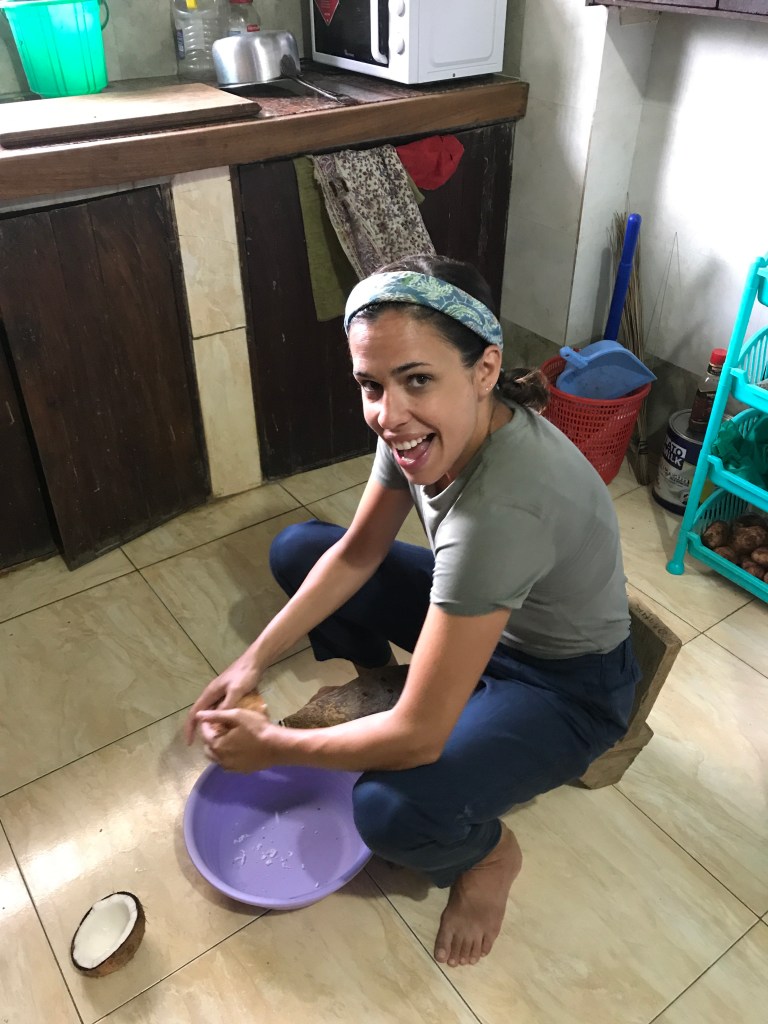
Lamu is the type of town where you are almost more likely to see a donkey than a human. Even when you can’t see one, you can often hear one, nay’ing in a quiet corner of a narrow alley. We became quickly used to the donkey nays along with the animated chatter in the streets below and the call to prayer which became our soundtrack to Lamu island. As well as the sounds, we became a little obsessed with Lamu food. We asked our new favourite eatery, Sea Souq, if they could hone our culinary skills. We were kindly hosted by them for a morning, in their home, learning to make Swahili curry and chapati which involved lots of impressive flipping and knife skills (less so by us, more so by our host). We became a little obsessed too with the brilliant morning yoga sessions at Banana House.
Our time in Lamu felt like a true holiday within a holiday. We loved it so much that we already talked dates about when we can return and completed an AirBnB search of other places we could stay. We left Lamu and its donkeys behind, feeling recharged after a fairly busy few weeks, by backpacker standards at least.
Next stop – Nairobi. We stayed at another great AirBnB, hosted by an US expat, Anne and her family. This was situated in the hills of Karen, an area named after Karen Blixen – author of ‘Out of Africa.’ Our time here was short and so we focussed it on the area of Karen itself, visiting the Karen Blixen Museum and hiking in the Ngongo Hills. We also found what must be the world’s largest Carrefour supermarket. It’s amazing how exciting a supermarket shop for bug spray and shower gels can be after being out of large cities for so long.
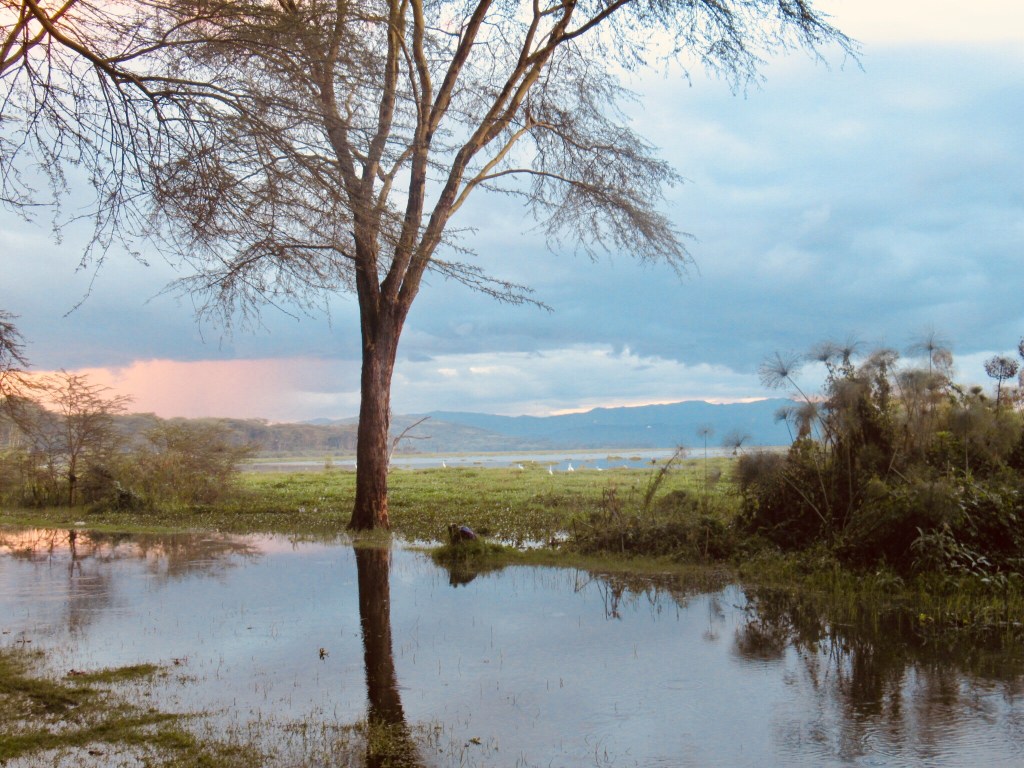
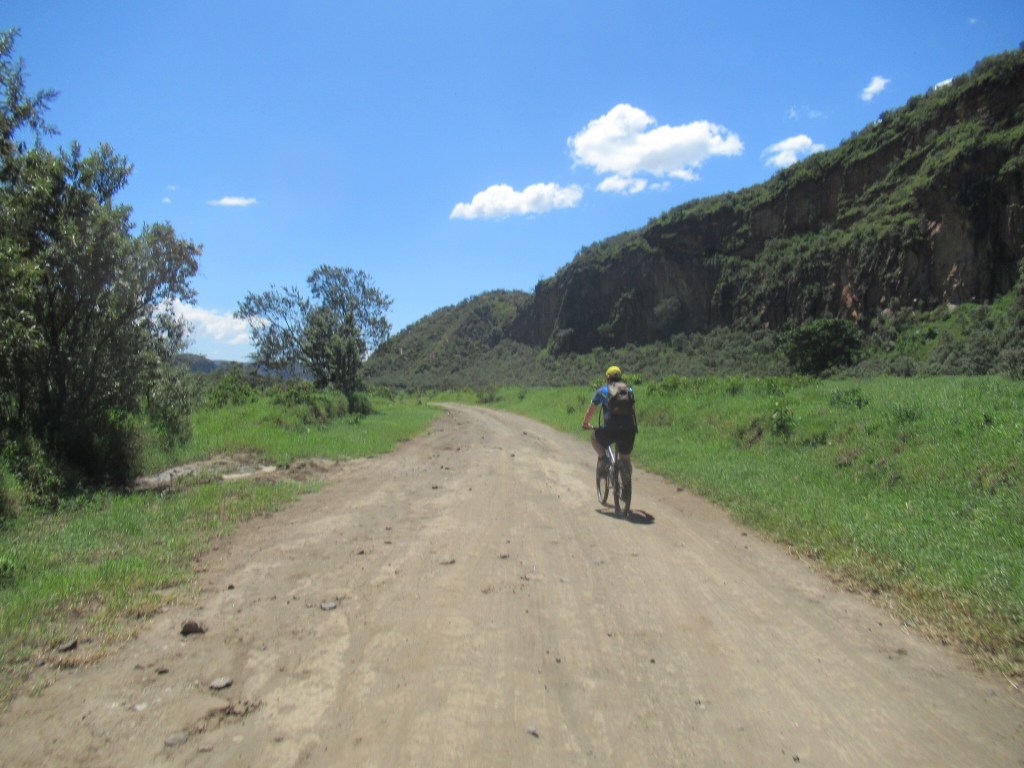
We returned to our new normality the very next day, travelling to Lake Naivasha where we would see in the new year. We stayed at Camp Carnelly’s on the shores of the lake, with hippos for company. A highlight of Lake Naivasha was Hells Gate National Park, where we were able to cycle freely with zebra, monkeys and impale. Most of our lunch was gobbled by a group of baboons, who joined us at our picnic table.
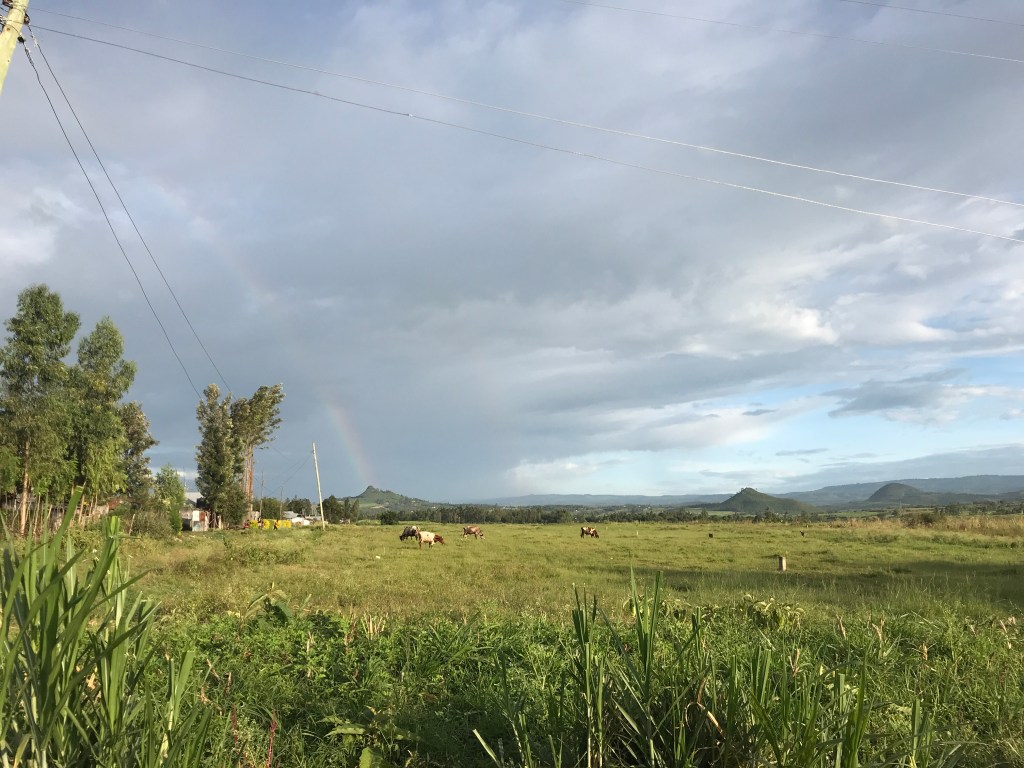
The final part of our Kenya trip was particularly special, deserving of a blog in its own right. Tom’s Great Aunt, Sr Agnes Cleary, originally from Tipperary, Ireland lived in northern Kenya, near Kisumu, for over fifteen years until she sadly passed away from malaria in 2003. In her fifteen years living in Kenya, Agnes built two schools and developed health centres in the communities of Bolo and Muhoroni, with her great friends and colleagues in the Sisters of Mercy mission. We visited Sr Vincent Finnerty in the small sugarcane farm community of Muhoroni, around 60km from Kisumu. The surroundings of Muhoroni are simply beautiful, a multitude of shades of green enveloping the hills as far as the eye can see.
After the sudden departure of Agnes and another friend, Sr. Mairead (also from malaria), Vincent continued efforts in Muhoroni alone, finishing the work that was started in 2003. Vincent is still there today, expertly leading the operations of a community hospital, maternity unit and palliative care centre. Brick by brick, the school and health centres have been built up over the years. St Agnes Muhoroni Primary School is still in existence today, with over 700 pupils and some of the best results in the local area. We met the Headteacher for St Agnes as it is today, who gave us a tour of the building, just days before another 700 pupils would start the new year. Vincent showed us the wonderful work of the hospital in preventing HIV and caring for people in their final days, respecting local custom and tradition of many tribes in the area. We spent some time with the team at the hospital and also out and about in the local cafes of Muhoroni, drinking soda. Kelsey even became Digital Content Manager for the hospital, creating a website to promote the work of the mission (to follow).
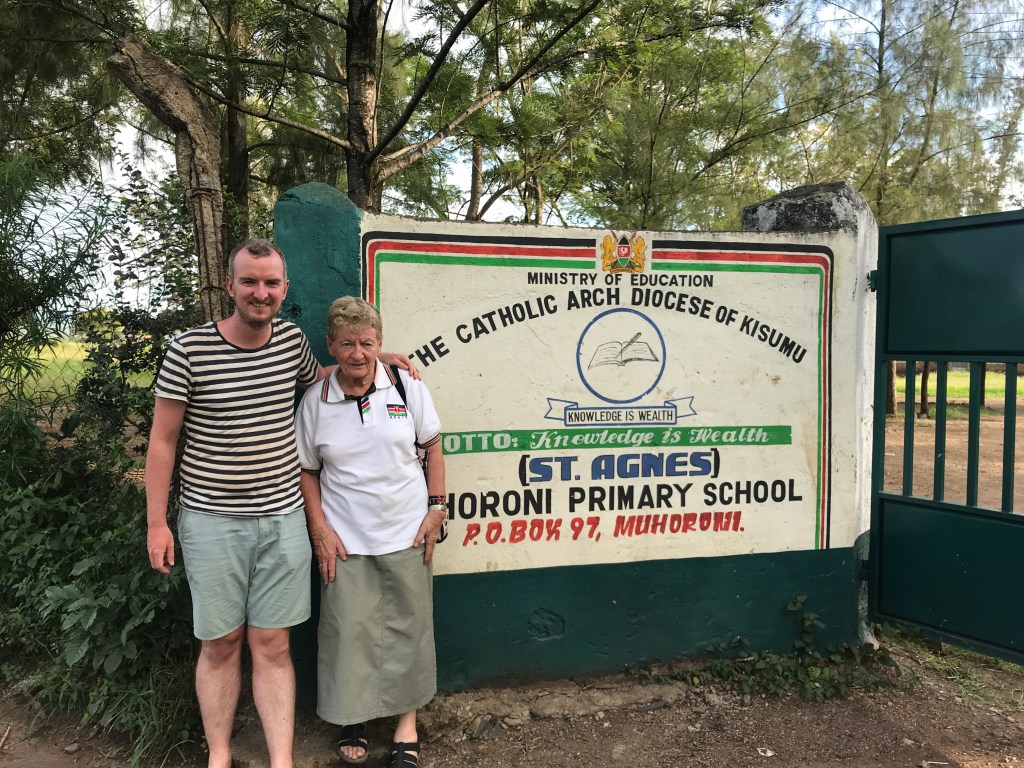
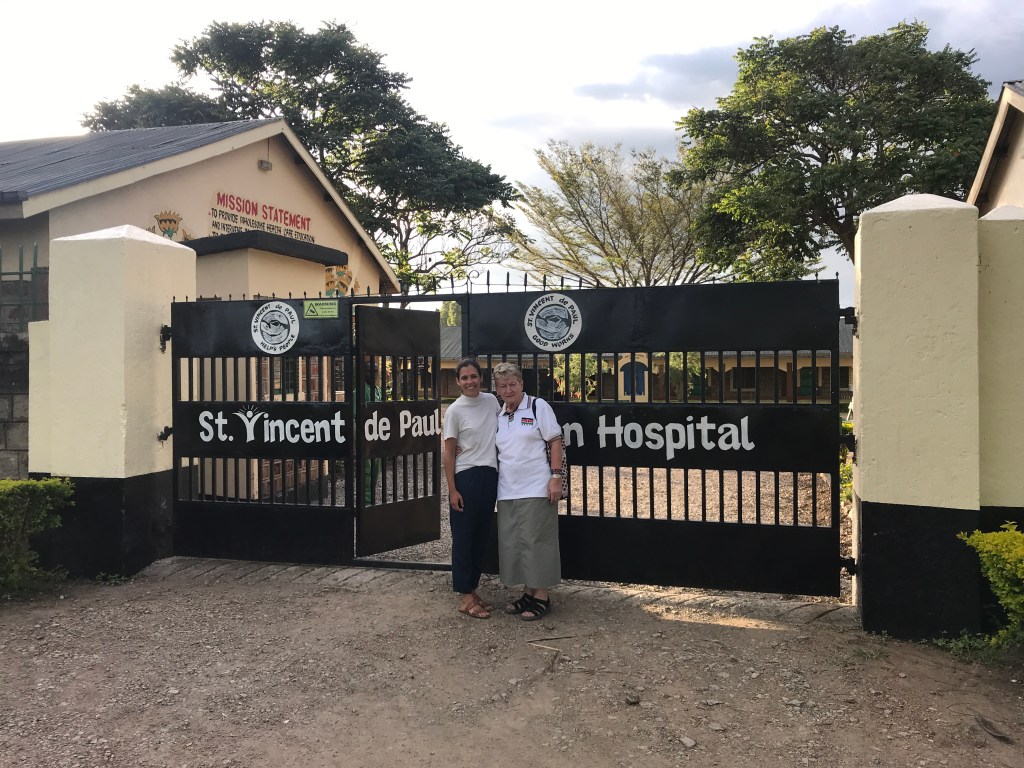
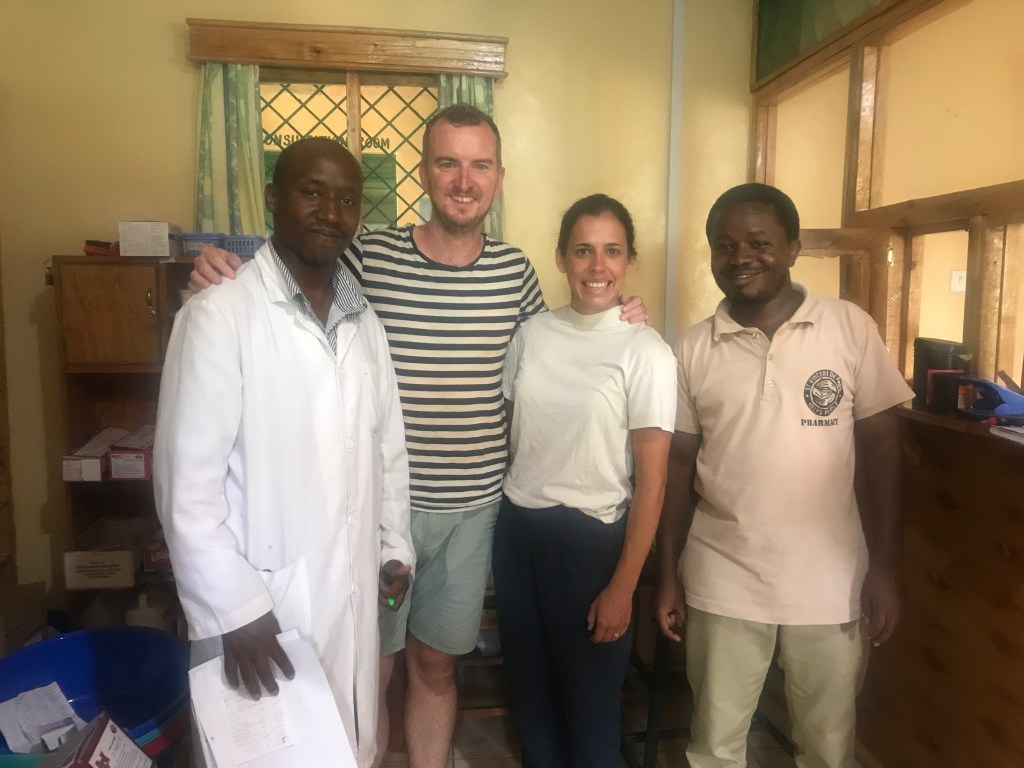
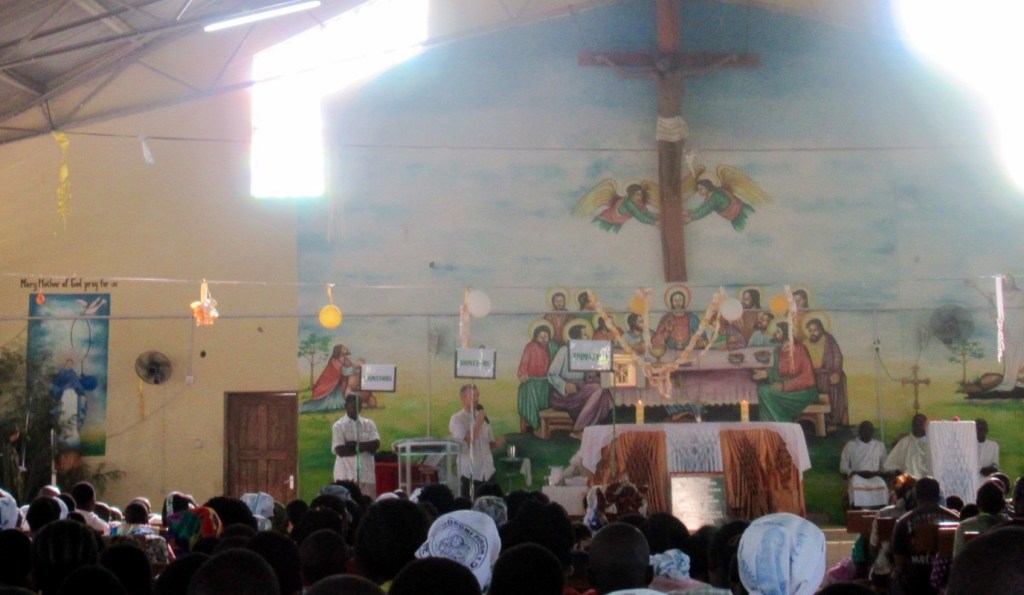
As the only Muzungo’s (foreigners) in the village, there was lots of curiosity around our visit, handshakes and some picture snapping. When we explained why we were there, it was clear Agnes was still known for her work, all these years on. On our final day, we had an early rise to attend a church service which started at 7am. Tom was asked by the parish priest, Fr Oscar, to do a greeting to the community and talk about memories of Sr Agnes which was a real honour. The church service was filled with music and dancing, with a group of ‘animators’ who came to life in the many hymns.
Tom had always planned to make a visit to Kenya to see Agnes and her work, inspired by her energy and passion when she returned to Ireland / England in the summer holidays. Whilst she sadly was not there to welcome us, we had the most wonderful welcome from Vincent and the local community who took us under their wing in more ways than one. We vowed to return again and also pledged to start a fundraising campaign to purchase an ambulance for the community. It’s one of the final pieces of Vincent’s very large and ever expanding jigsaw puzzle, crafted over the years with love. Without an ambulance, at the moment, everything is dependent on goodwill and things being in the right place at the right time, which isn’t always the case. There are no guarantees that patients or expectant mothers can be transferred in quick time to where they need to be. This might include an expectant mother, with complications, who needs to travel to Kisumu instead to deliver her baby. It might include too a young child, brought to the hospital for immediate life saving treatment after an accident, who also needs the input of more specialist doctors elsewhere. We need to raise £17,000 to make happen and the hard work starts when we return!

 The wondering wanderers