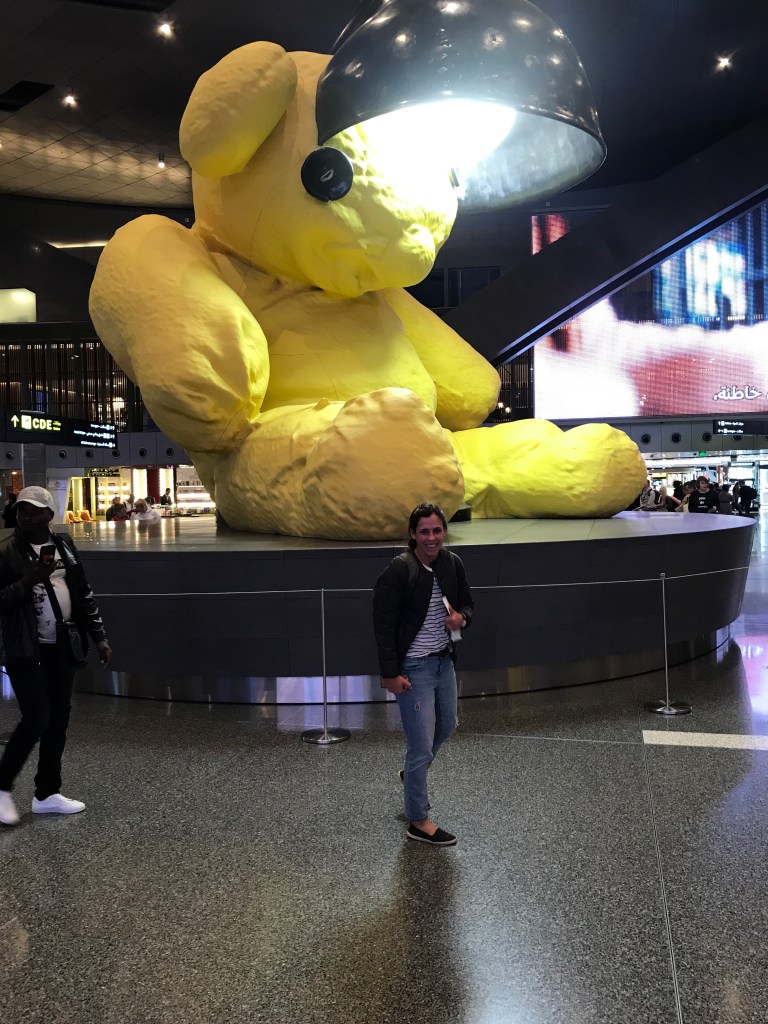
We arrived bleary eyed into Cochin International Airport, after a quick photo stop for Kelsey, with the big bear at Doha. This is a long established tradition of her Imperial team on their many trips to Qatar. Looking at the map, Tom had estimated a driving time to our first destination of Marayoor, Kerala of three hours. Our first learning in India was that any driving time estimation should always be doubled as the taxi driver cheerfully told us, “six hours, Sir!” We crawled up the hills of Kerala into more rural and quaint scenes, accompanied by the incessant, if slightly meaningless, beeping of drivers all the way up. Learning two of our India Trip was that whilst “the beep” in the UK is reserved for near-emergency situations, “the beep” in India is a normal part of every driving trip.
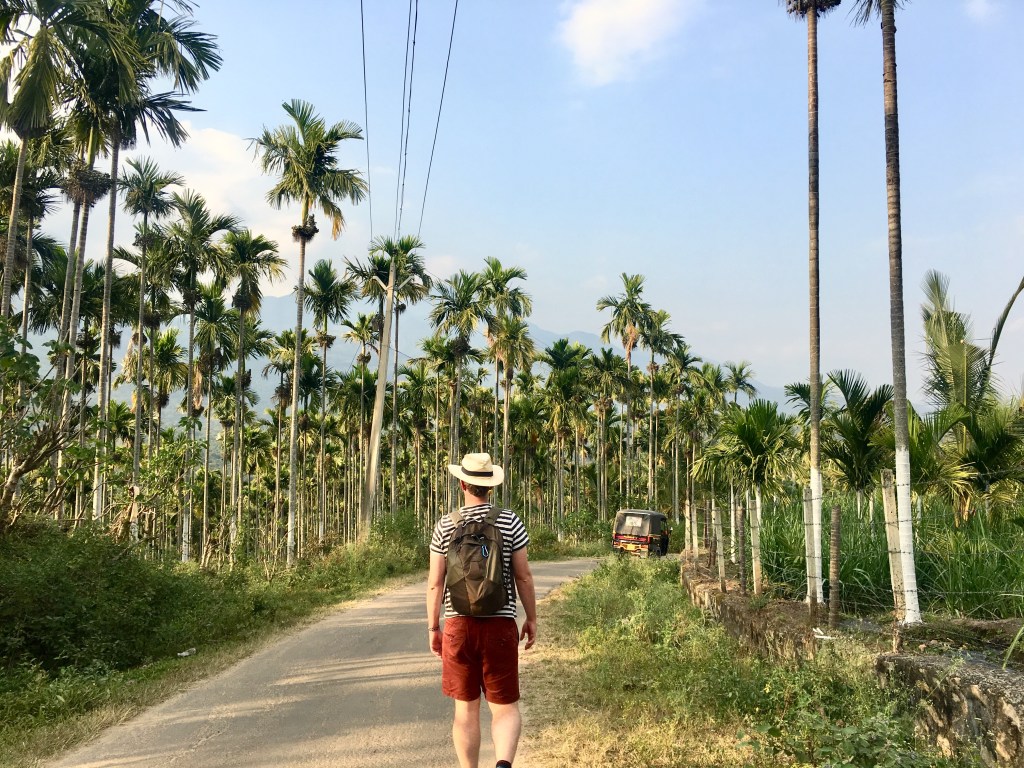
We arrived at our destination, Mudhouse, in the small village of Marayoor, surrounded by sandalwood forests and paddy fields. Our AirBnB was tucked away on a quiet lane outside the village; a perfect spot for experiencing authentic Keralan village life and walking in the undulating hills. We were looked after by Ajay, who would rustle up some of our favourite meals of our trip in the Mudhouse kitchen; a range of curries, dals and breads which we lapped up and couldn’t get enough of (literally). To work off insatiable appetites for AJ’s cooking, we spent our time cycling and walking through the villages and forests. Our walks were largely uninhibited until we reached the sacred sandalwood where we were told it was “for office use sandalwood trees only.” Given that neither of us could pass a sandalwood tree and neither of us worked in the mysterious sandalwood office, we rerouted in another direction. Learning three of our India trip was that we were now in a more rules based culture that we’d have to adjust to, but this was balanced by the laid back feel of Marayoor and the smiles of the people around us.
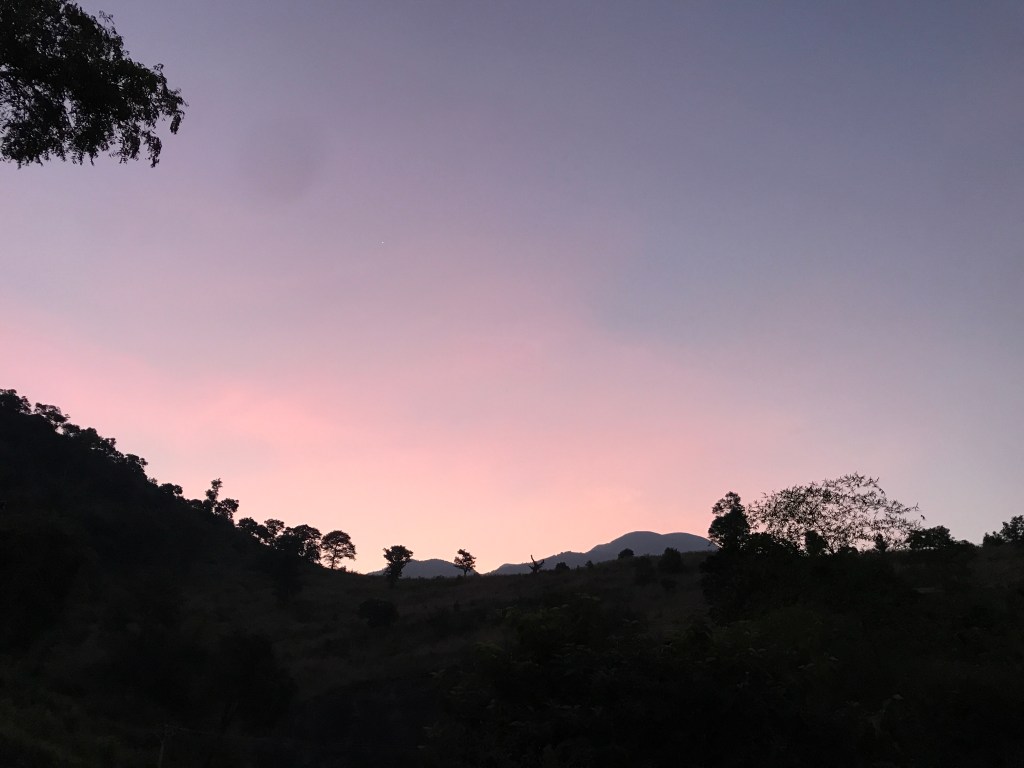
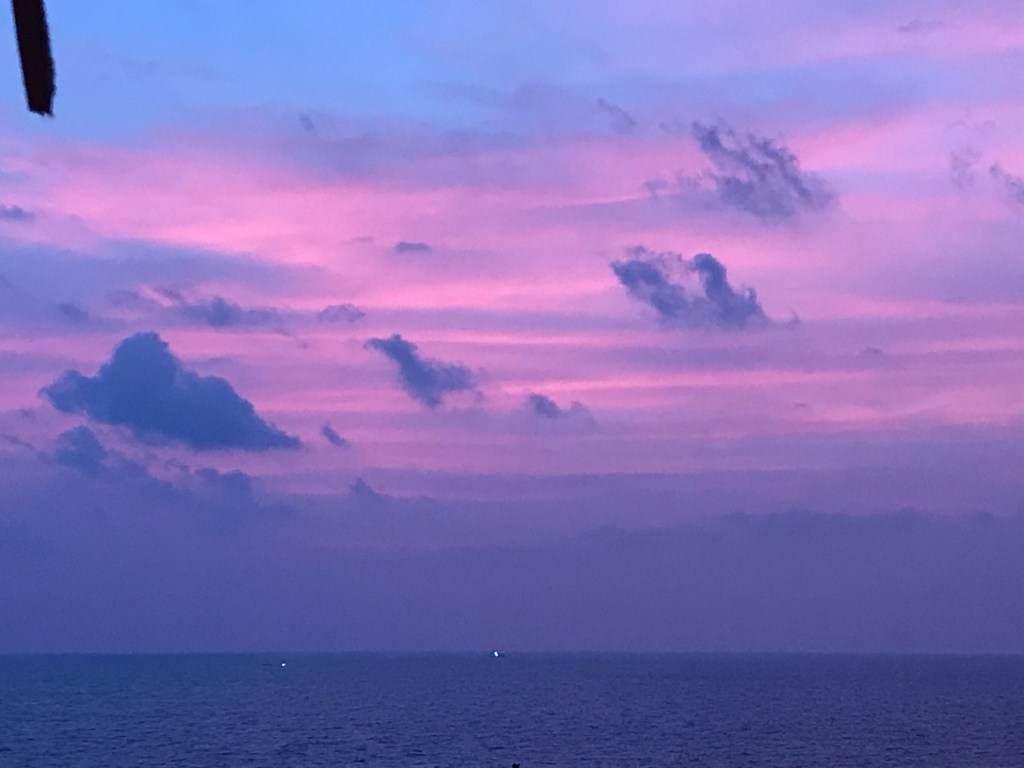
The laid back nature of Marayoor and it’s purple evening skies meant that we could have easily stayed longer than our three nights. It was time however for us to meet “Special Guest of the Trip #3” – our friend Alice – who joined us in Kerala for ten days and writes the next section of the blog for us as Guest Editor…
Gazing out the window of the taxi that Tom and Kelsey had arranged to collect me from the airport, I had an immediate sense of Kerala’s serene and easy-going nature that I’d read and heard so much about. I’d first visited India ten years ago and had fallen in love with it then, but I was eager to experience it at a slower pace, something that Tom and Kelsey’s itinerary provided me with the perfect opportunity to do.
After reunion hugs and a quick cup of coffee at a cafe around the corner it was time to catch the train to Varkala, a coastal town 180km south of Kochi where we were due to spend four days at a yoga and meditation retreat. In my sleep-deprived fog I shamelessly took advantage of Tom and Kelsey’s well-honed competence in navigating foreign transport systems and followed their lead in the quest to locate our reserved seats. Booking advance train tickets in India (essential to avoid the sweltering and rammed standing carriages) is a test of endurance and willpower, with the final hurdle saved for the very last moment when you arrive at the station and have to figure out where to position yourself on a platform that stretches for what seems like miles in either direction. Shifting only very briefly from a fast walk into a light jog, we (they) successfully located our very comfortable sleeper-style seats where we chatted, read and, in my case, dozed for the next four hours (Indian trains are not in a hurry to get anywhere).
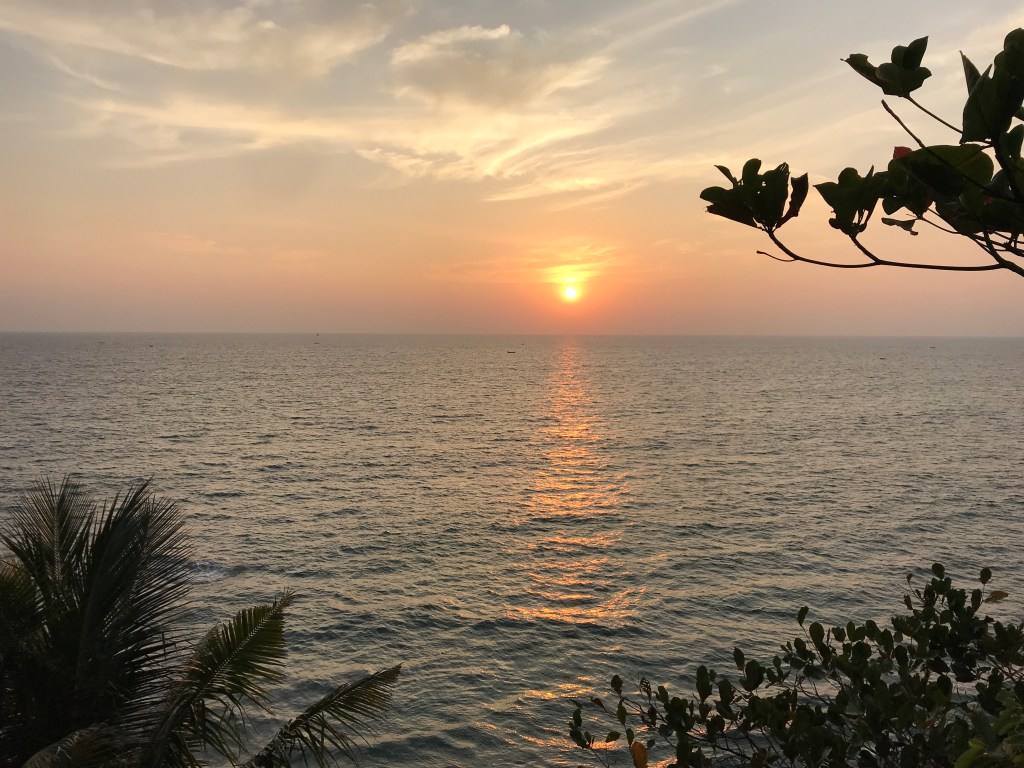
Perched atop 15m-high cliffs overlooking golden beaches and dramatic sunsets over the Arabian Sea, Varkala immediately felt like a place we were all very happy to have found ourselves in. At dinner that night we had our first experience of the benign resistance of local businesses to the government’s attempts to curb alcohol consumption across the state by imposing strict licensing laws: beer served in large mugs resembling tree trunks, opened bottles stored underneath rather than on top of the table and cocktails disguised on drinks menus with playful pseudonyms (‘Sin and Tonic’ became a particular favourite).
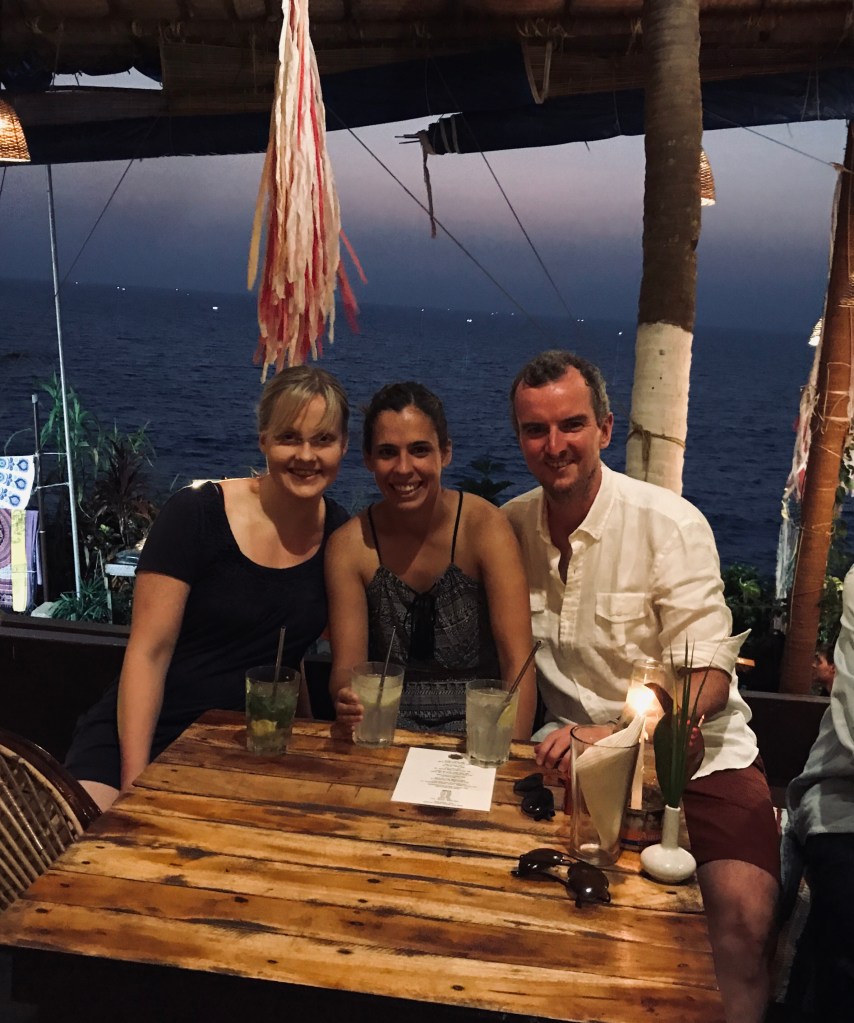
We pitched up at Sharanagati Yogahaus the next day fresh from our first sea swim and were met by Hari, our spiritual teacher for the next few days. After reminiscing on his years spent in San Francisco in between his native Berlin and making his home in India, Hari showed us around the beautiful grounds and talked us through the daily schedule: breathing exercises and meditation at 7am, then two hours of yoga at 8am followed by a healthy breakfast of oatmeal, fruit and tea. A nutritious home-cooked lunch would be served at 1.30pm, followed by another hour and a half of yoga at 4pm. Despite being a far more rigorous yoga and meditation schedule than any of us were used to, with few other obligations we easily slipped into our new routine, spending our ‘free time’ drinking coffee on the cliff top, dipping in and out of the sea and, in mine and Kelsey’s case, having questionable massage experiences. With days of virtue behind us, evenings were spent sampling as many chapatis, rotis, naans, biryanis, masalas and countless other local delicacies as possible and sharing our personal successes (usually yoga-related) and struggles (usually breathing or not falling asleep while meditating-related) of the day.
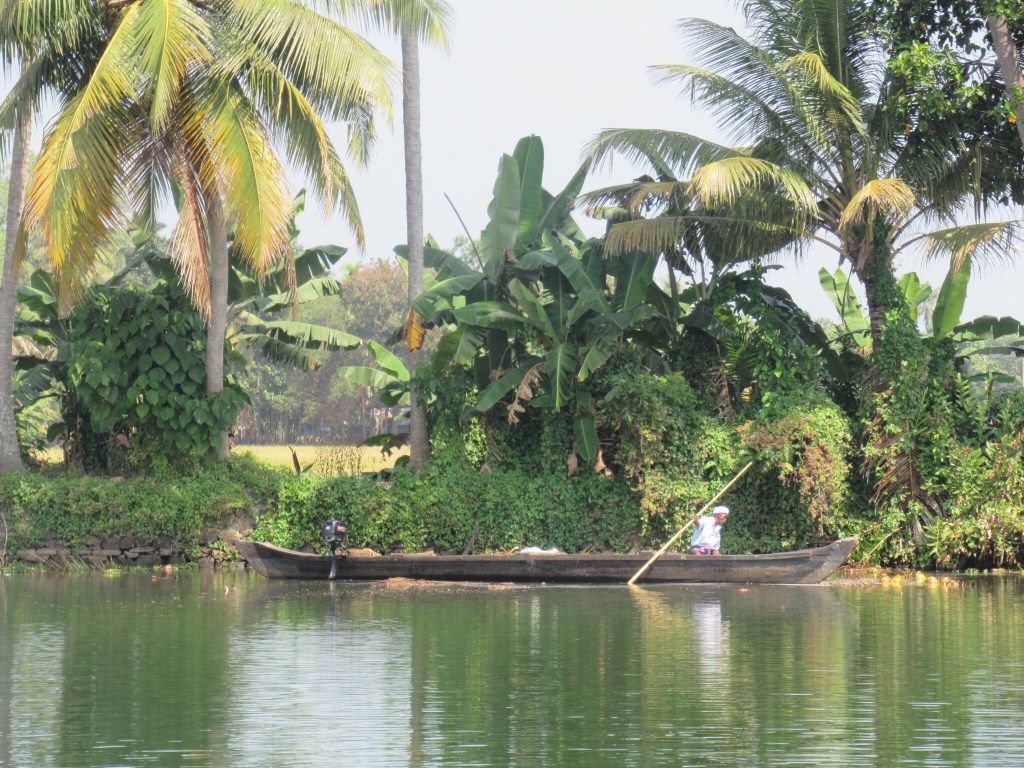
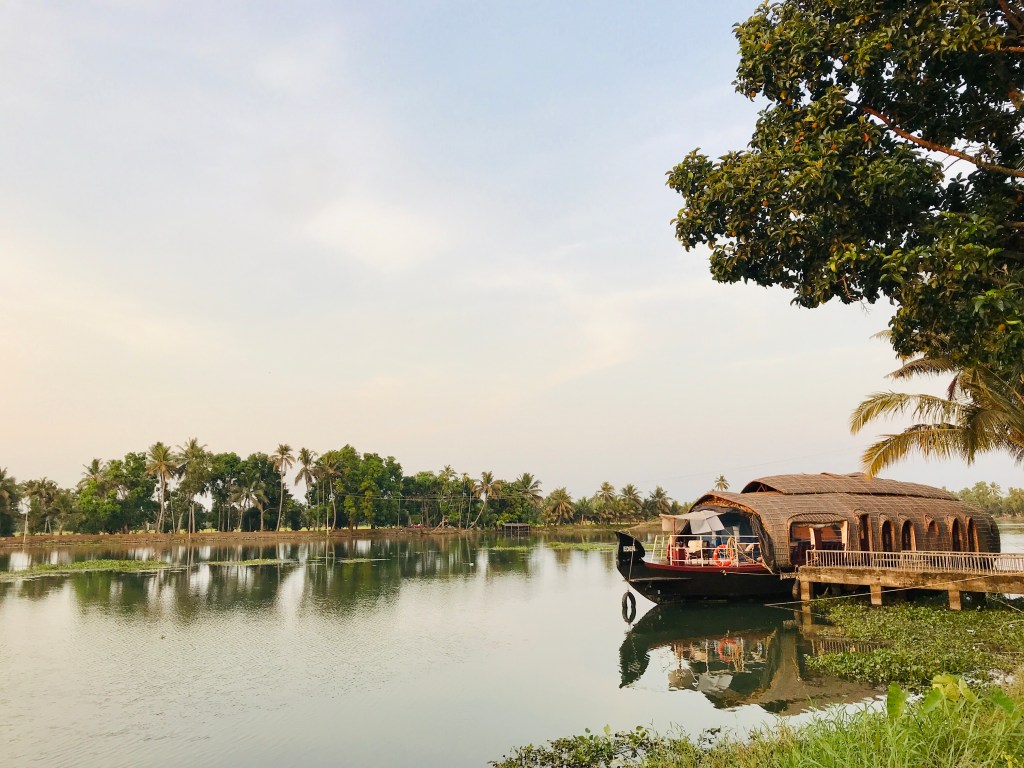
At the end of our stay we hugged goodbye to Hari and resolved to take his wisdom with us onwards on our journey. Our next stop was Alleppey, the gateway to Kerala’s famous backwaters, a network of lagoons, lakes, rivers, and canals lined with palms, banana trees and lush green paddy fields. We’d read that the backwater traffic could become ‘gridlocked’ at peak season, so were pleasantly surprised to find ourselves the only boat in sight (save for the occasional canoe) for the majority of our trip. We passed the time taking in the birdlife, eating delicious food cooked by our hosts and wandering through local villages when we docked at the end of the day (oh, and one more questionable massage experience for Kelsey and I, after which we called a day on that particular endeavour).
From Alleppey we travelled back to Kochi for our final day together, exploring the old town’s cafes, galleries and ‘no hassle’ jewellery and craft shops, before Tom and Kelsey headed to the airport for their flight to Goa and I travelled north in search of Kerala’s most secluded beaches.
As soon as we left Alice, the pace increased rapidly and immediately. Being travellers on a budget, we decided to take a Tuk Tuk 40km to Cochin International Airport; our driver told us it would be a 40 minute trip. Things started well – our driver was cheery – and we made speedy progress as the sun began to set. In our time in India so far, we’d become accustomed to the endearing Indian Head Bobble (https://bbc.in/2JL083J). As we drove on increasingly busy roads, now in the dark, the Head Bobble of our driver became increasingly pronounced. As we merged onto an motorway – in a Tuk Tuk – we were met with even more searing beeping from lorries and coaches. We figured out pretty quickly, as his driving became increasingly erratic, that this wasn’t just a usual Head Bobble…our driver was falling into a snooze. Clapping and shouting him back into vague consciousness, we kept our beady eye on the level of Head Bobble in the darkness, eventually arriving at the airport ninety minutes later. After one of the most stressful journeys of our lives, we vowed to keep any future Tuk Tuk rides to less than 30 minutes and avoid taking a Tuk Tuk on a motorway.
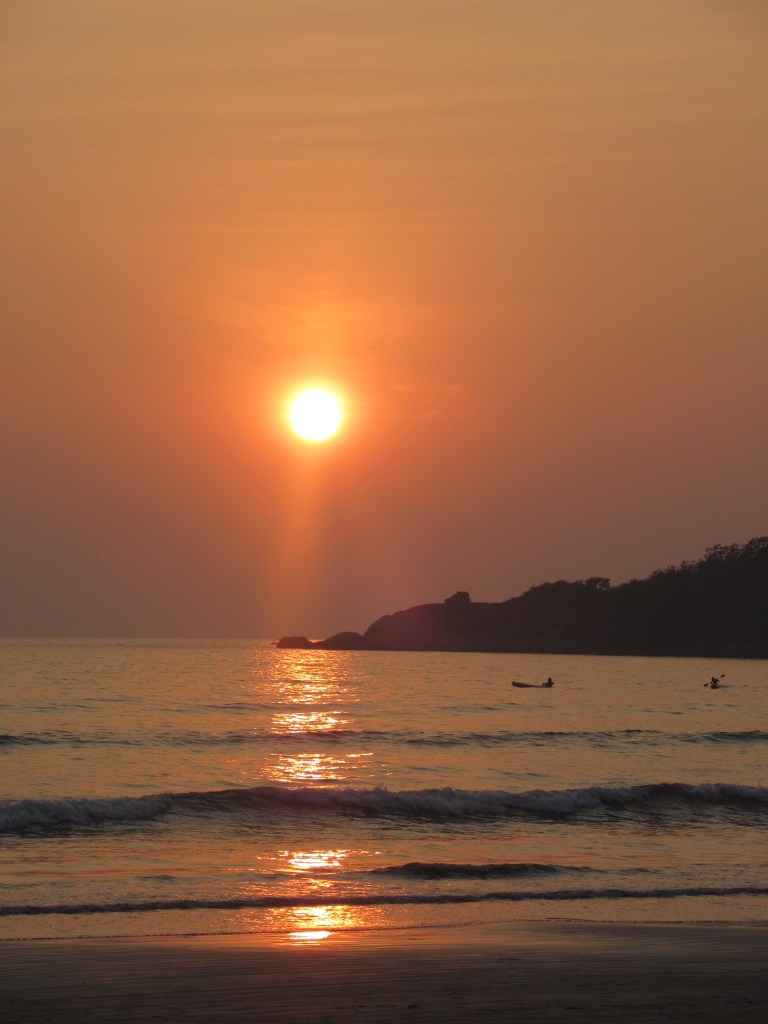
After a much less eventful flight, we arrived in Palolem beach in the state of Goa for a quick two night pit-stop on our journey north. We spent our time enjoying “Sin and Tonics” on the beaches, glorious Indian Ocean sunsets and found a great yoga teacher on a hostel rooftop who helped us carry on our learnings from Hari. With its reputation for being a Mecca for yoga teacher training, we relished the plethora of veggie and vegan cafes which lined the beachside.
Waving goodbye to the Indian Ocean, we left Goa for our first experience of an overnight train, bound for Mumbai. After some “selfies with a tourist” at the station – this was becoming a common theme of our trip – we settled into our top bunks. As the train rattled through the pitch black, we slept as much as we could, woken only by the toots of other overnight passing trains or the calls of a tea and biryani sellers moving down the carriage.
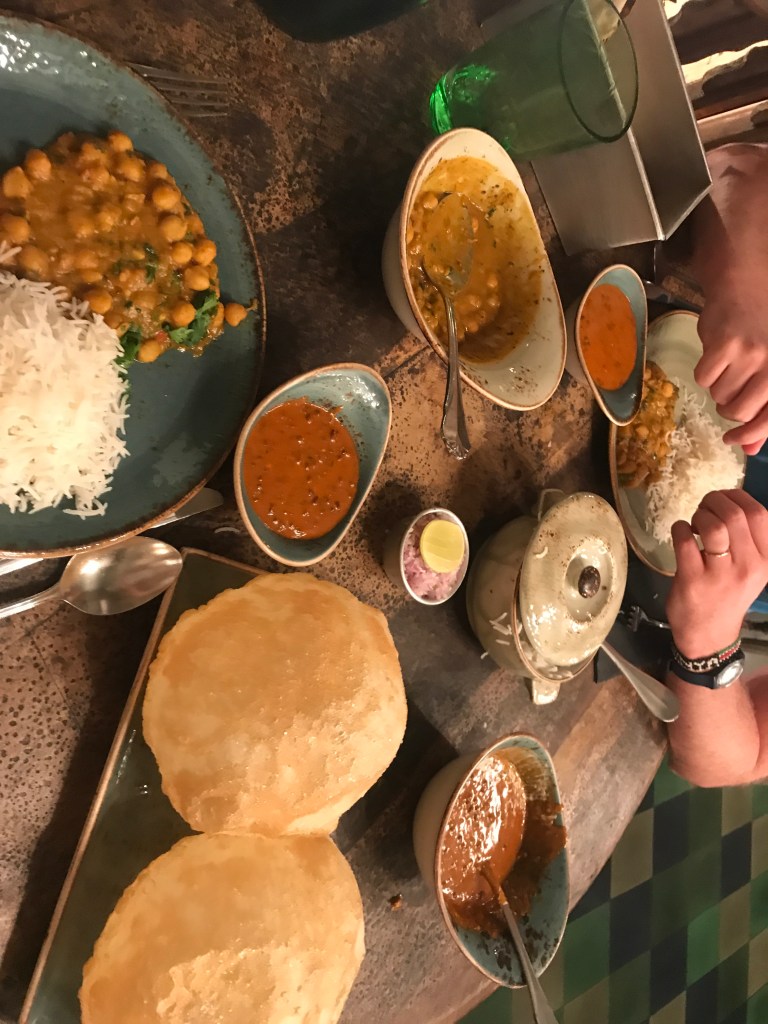
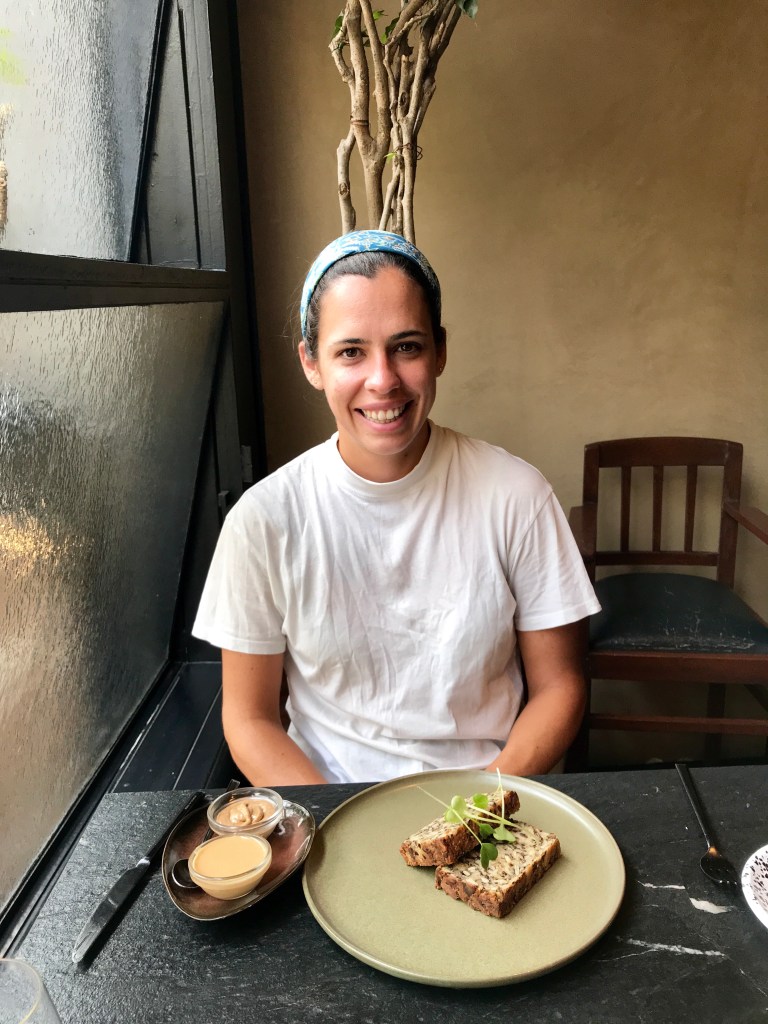
The train rolled into Mumbai’s central station the following morning. There’s something very special about watching a city stretch its arms and wake up. As our taxi sped through the empty roads at 5am, we saw the market traders laying their wares, jostling for the best trading positions and lights flickering on in the Mumbai skyscrapers. After arriving at our hostel – aptly named Horn OK Please in recognition of India’s obsession with the car horn – we took a quick nap before setting off to experience Mumbai’s food scene. This is effectively how we spent the majority of our time in Mumbai. Eating. We lapped up the deliciousness and favours of Pali Bhavan and Pali Village Cafe in Bandra, interspersed with some walks along the Mumbai’s Bandstand Promenade and trips to see the city’s impressive array of Art Deco architecture.
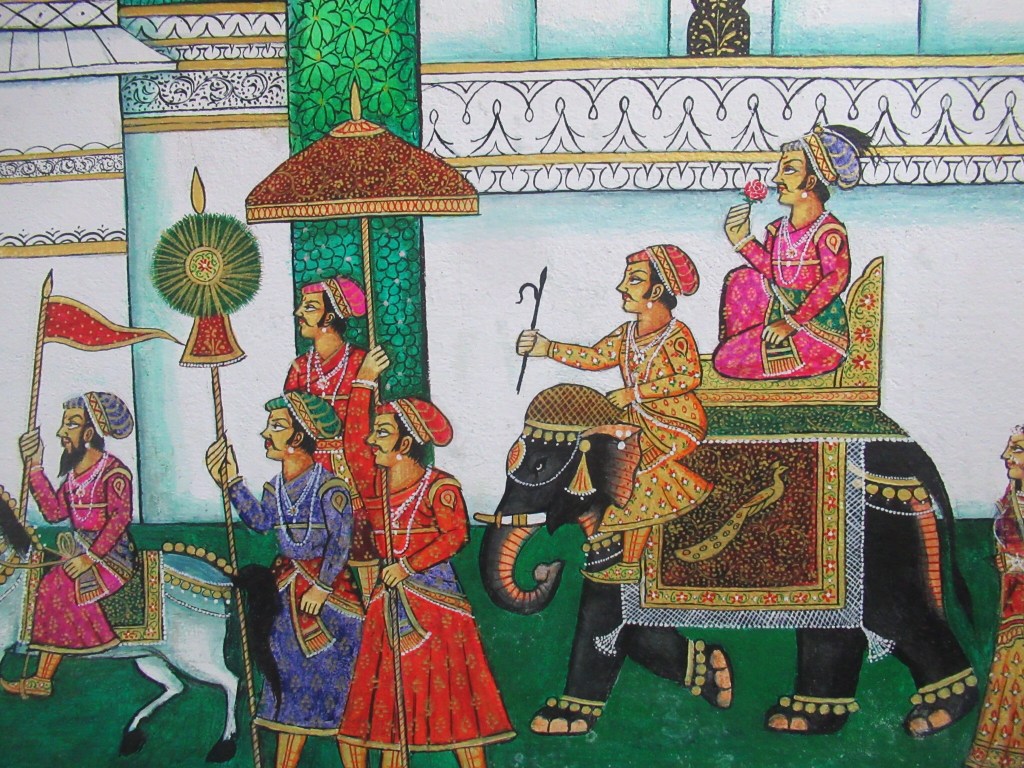
After some weeks of beach and retreating, we eased back into the buzz of city life in Mumbai. It helped us feel more ready to embrace the sensory overload of Rajasthan that we had prepared ourselves for. Our first stop was to Udaipur, set around a series of lavish royal palaces and lakes. We lucked out with a free upgraded room, with a Palace view. Kelsey had travelled here before, meaning we had a pre-prepared list of must do places to visit. Udaipur is perhaps most famous for being the host of the Rajasthan art scene, home to hundreds of art schools and painters, skilled in miniature art and wall murals which often depict the opulence of Rajasthani culture. The paintings are made using a process which involves making vibrant natural colours from scratch, all painted with the hair of a camel. On our walking tours of the city and dinners on a range of Udaipur rooftops, we experienced the opulence for ourselves.
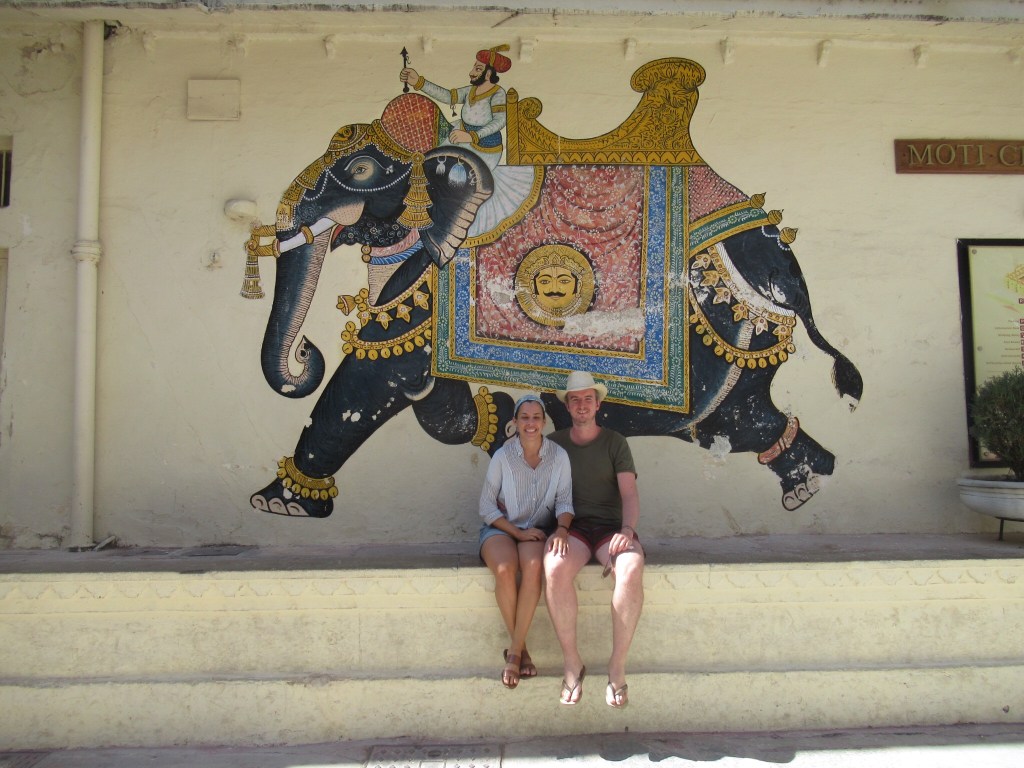
With some new art pieces, we waved goodbye to Udaipur and took our first “sleeper bus” to Jodhpur. The “sleeper bus” was a new mode of transport for us and we had no idea what to expect. We joked that it would be a series of double beds, stacked on top of each other. We weren’t far off. We had our own pod complete with bed, beating Megabus or National Express by a country mile. We had a quick stop for ice cream en route, arriving to an AirBnB which didn’t quite look like it’s pictures in real life. The AirBnB pictures made it look rustic and ornate; what we found however was a mouldy, lime green room, with no windows and dust everywhere. We nicknamed it “The Morgue” largely because of the dark draped curtains which separated the bed. The morgue like feel we found ourselves in, prompted us to head for dinner as quickly as we could, in search of a rooftop and some air.
Our first night in the morgue brought the first bout of “Delhi Belly” for Kelsey and we were awoken by music blasting from a Hindu Temple. Craving some natural daylight, Kelsey navigated tummy wobbles and we made our own walking tour around the imposing Fort, the Blue City and a pristine temple in the hills. All the while, we tried our best to “stay away from dog” which was the simple, but difficult to follow, advice given by our Travel Nurse.
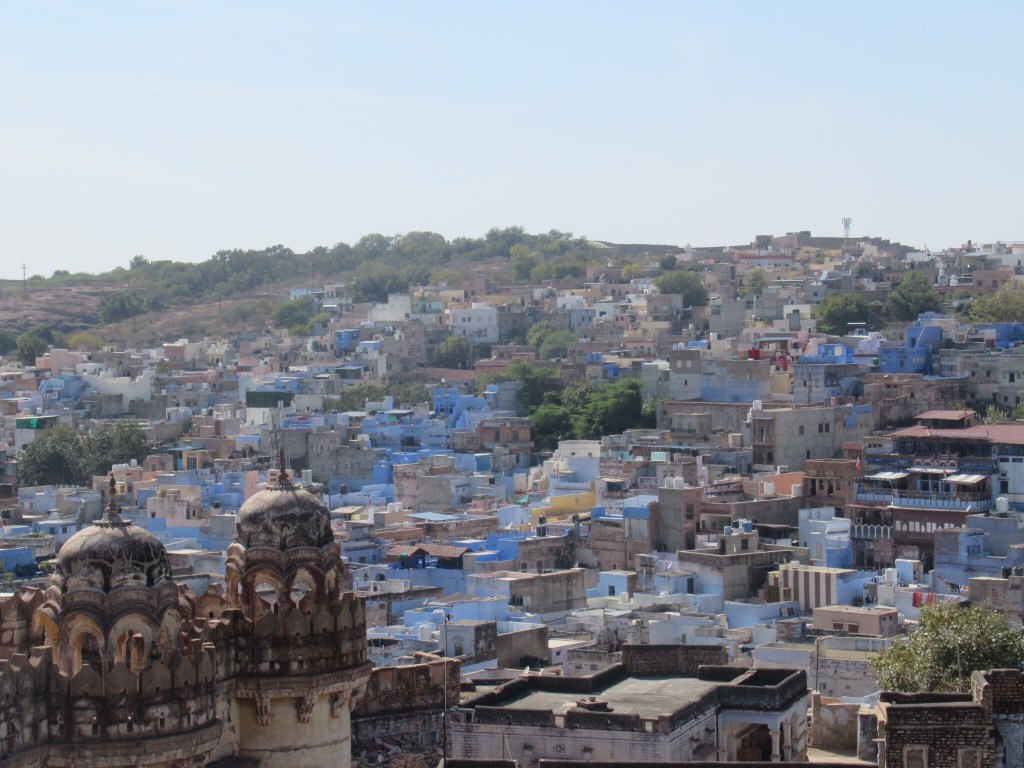
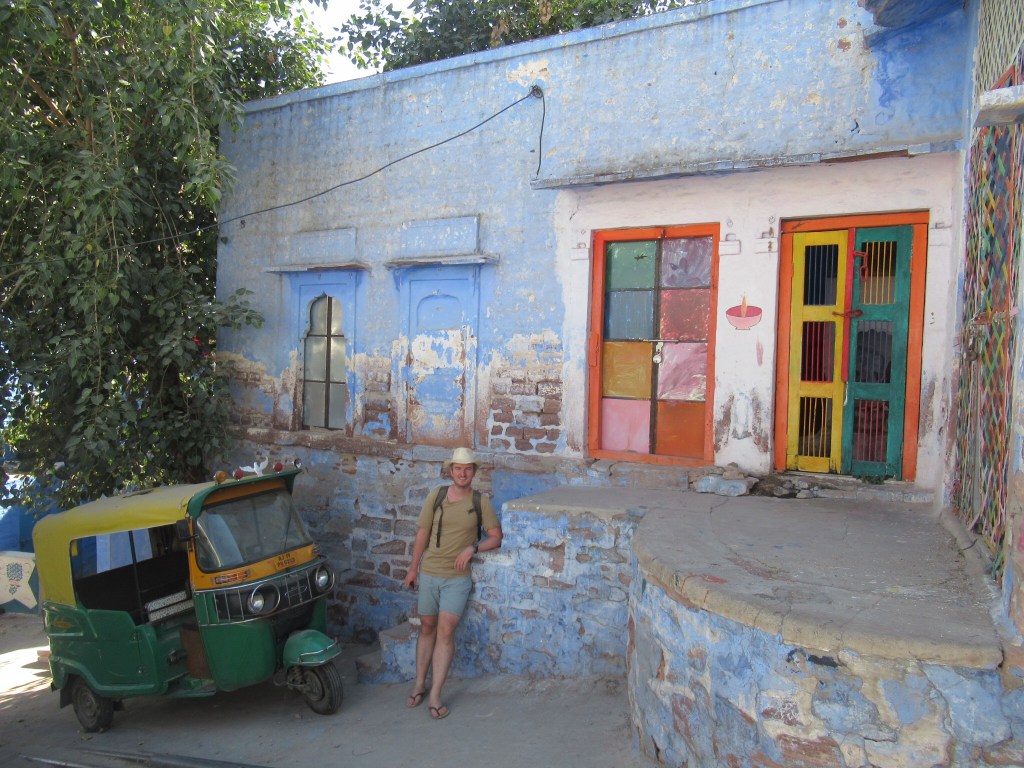
Our second night in the morgue meant that it was Tom’s turn for Delhi Belly, after gloating a little to friends that he had the stomach of an ox that very day. Both in recovery mode, we had one of our slowest days yet, walking a mere 300 steps to a peaceful cafe. Powered by orange juice and pancakes, it was time for Sleeper Bus #2, giving us an opportunity for mid-afternoon naps which proved to be a perfect antidote to wobbly tummies. Arriving in Ajmer on a dirt road, after a protracted negotiation with a Tuk Tuk driver, we arrived in the town of Pushkar. Our AirBnB in Pushkar was the day to the night of Jodhpur; our room was spotlessly clean, with huge windows overlooking flower fields and the hills surrounding the town.
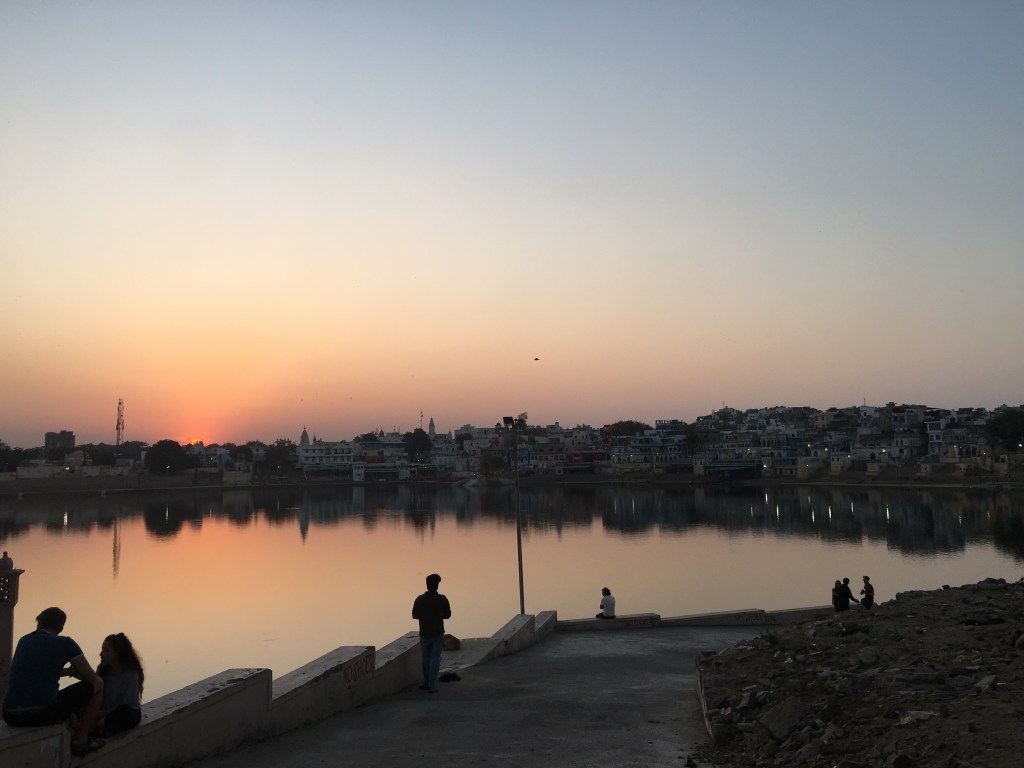
With increased energy levels, we were ready to explore Pushkar the following day. Pushkar felt like a welcome relief after the closeness of Rajasthan so far; a notch down on the proverbial Indian gear system. We meandered through the markets in town, hiked to a mountain Hindu Temple, practised our yoga and relaxed on the infamous sunset steps, watching performers practising their Poi and circus skills.
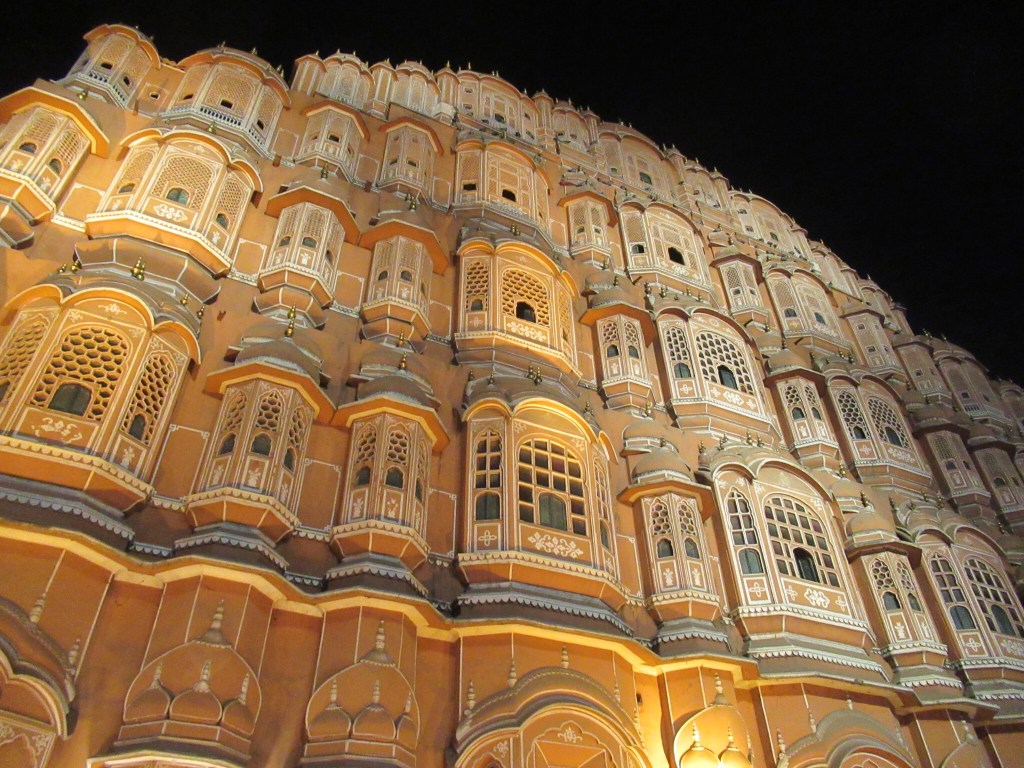
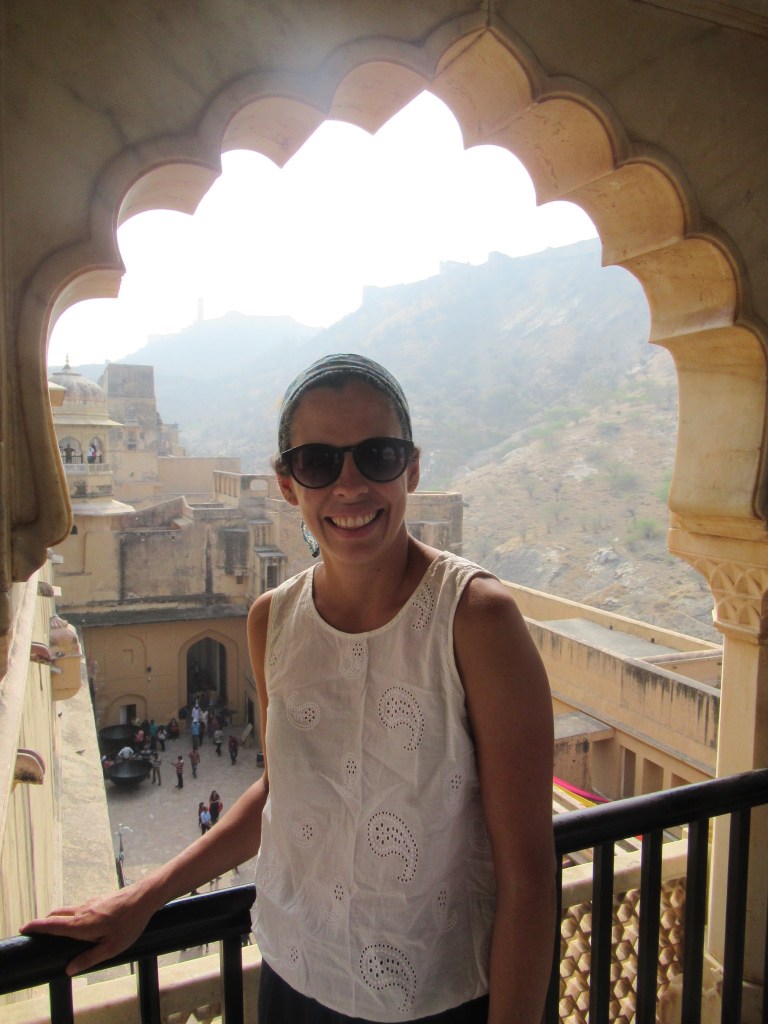
After the peace of Pushkar, we upped the pace in our travel to Jaipur – India’s pink city. We thought it was more orange than pink, but we decided it was best not to argue. Our main excursion here was to Amber Fort, a well preserved and architecturally stunning monument from the glorious days of Rajput rule in Rajasthan.
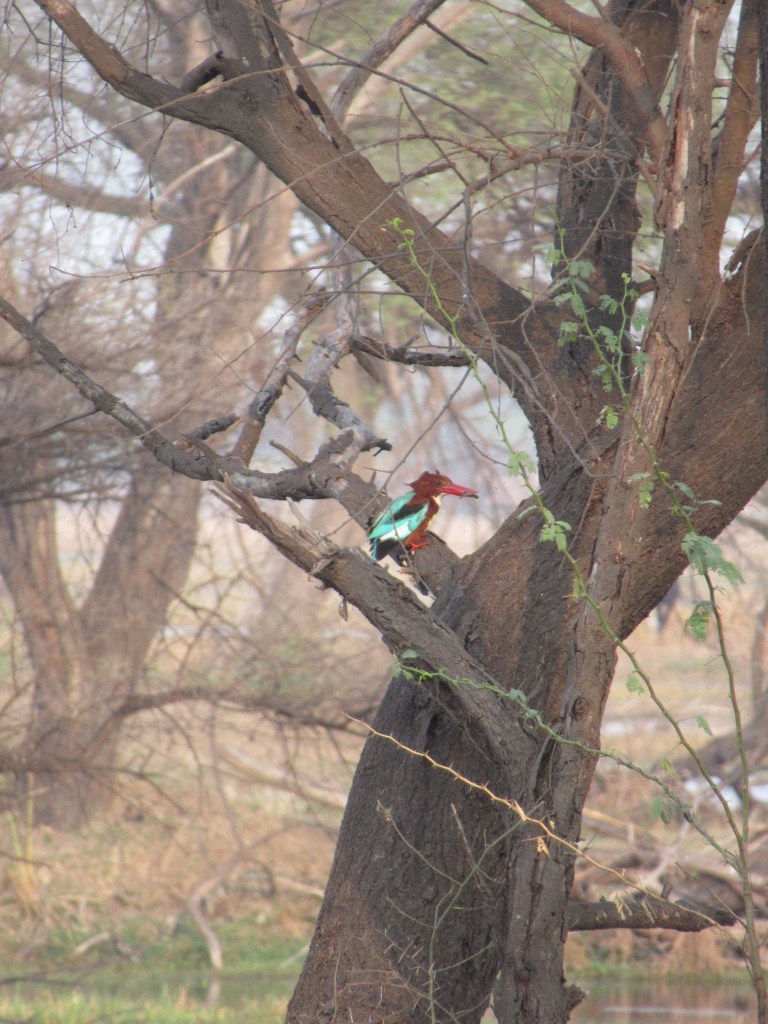
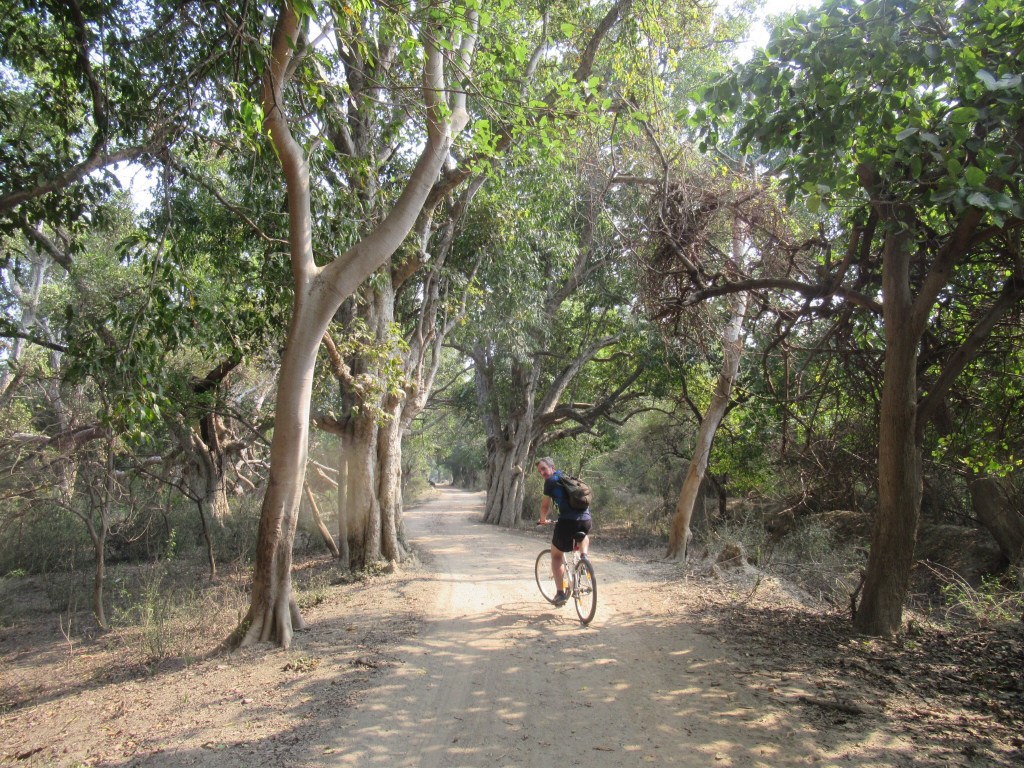
Bharatpur was our next destination. We found Bharatpur essentially by sticking a pin in a map somewhere near to Agra for the Taj Mahal. The pin landed in a good place as Bharatpur became a surprise highlight of our trip. Bharatpur is home to Keoladeo National Park, an 11sqm reserve which is home to over 360 species of bird and 380 floral species. We were able to cycle around the park, a neat square of complete peace and tranquility. We tried our best to integrate with the small crews of birders and twitchers, casually overhearing their conversation which helped us identify what exactly we were looking at. We also practised our best wildlife photography. We established quickly that wildlife photography is very difficult and spent at least half an hour trying to pap a Kingfisher who evaded us on a number of occasions. The picture below is our best shot, amongst a series of grainy others which will appear in our “Bloopers” album.
After tranquility in Bharatpur, we planted our feet firmly back on the tourist trail. We had planned a whistle-stop tour of Fatehpur Sikri and the Taj Mahal in one day. We were so keen that we were literally the first tourists to arrive in Fatehpur Sikri. Fatehpur Sikri is a magnificent fortified ancient city, once the short lived capital of the Mughal empire between 1572 and 1585, during the reign of Emperor Akbar. Today, a stunning mosque and three palaces built in honour of Akbar’s favourite wives still remain. Being the first tourists of the day to view the red sandstone buildings was something special.
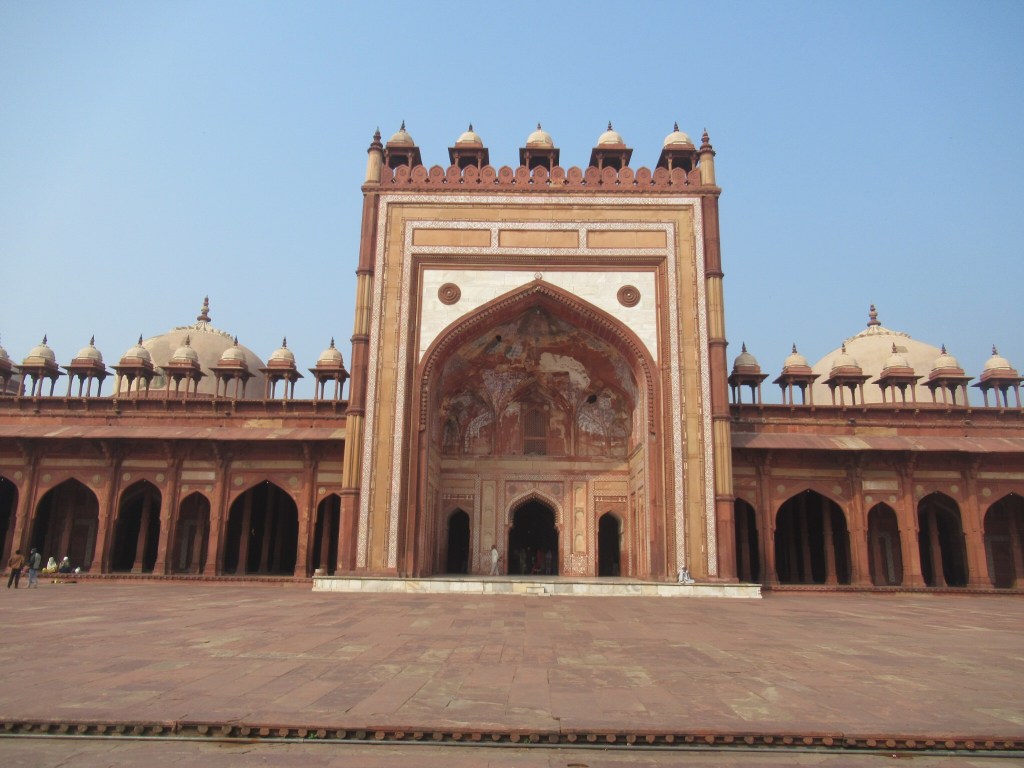
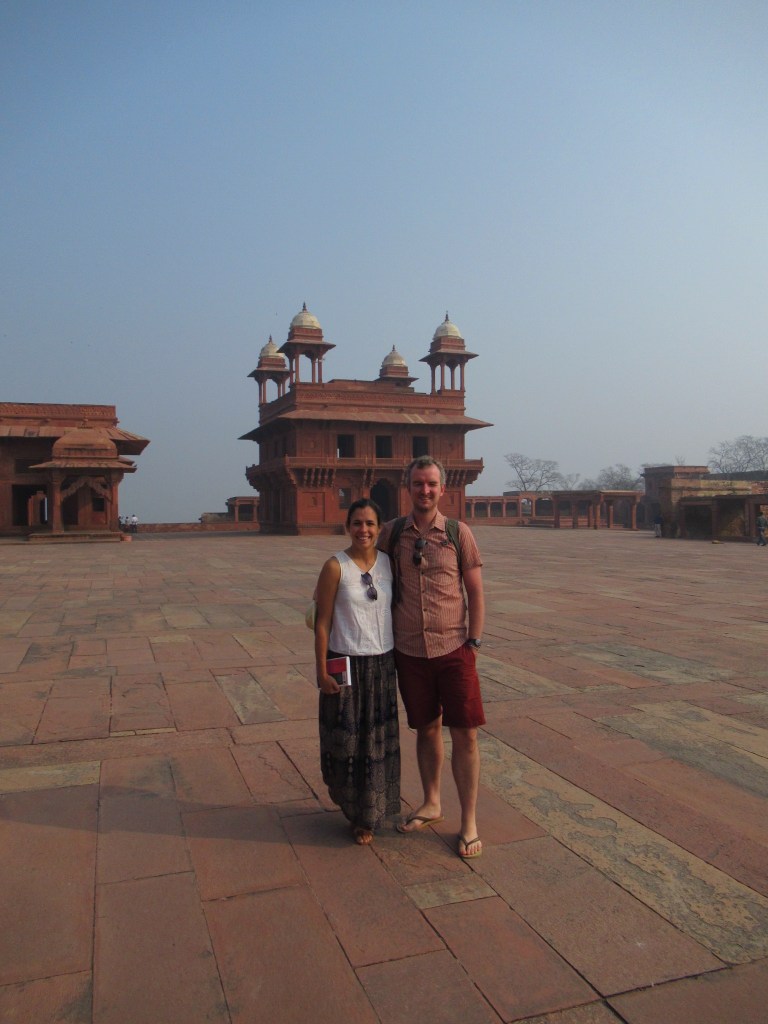
As we were leaving Fatehpur Sikri, the roar of a jet engine filled the sky. Looking up, we saw that there were two jets and figured out pretty quickly that this was Air Force One. Donald and Melania Trump were visiting India on a state visit and as we drew closer to the Taj Mahal, we could see that there had been quite the fanfare the day prior. The streets were lined with triple life size cut outs of Mr Trump and in a variety of poses; Trump looking a little pensive, Trump looking a little jowling and Trump looking a little intimidating.
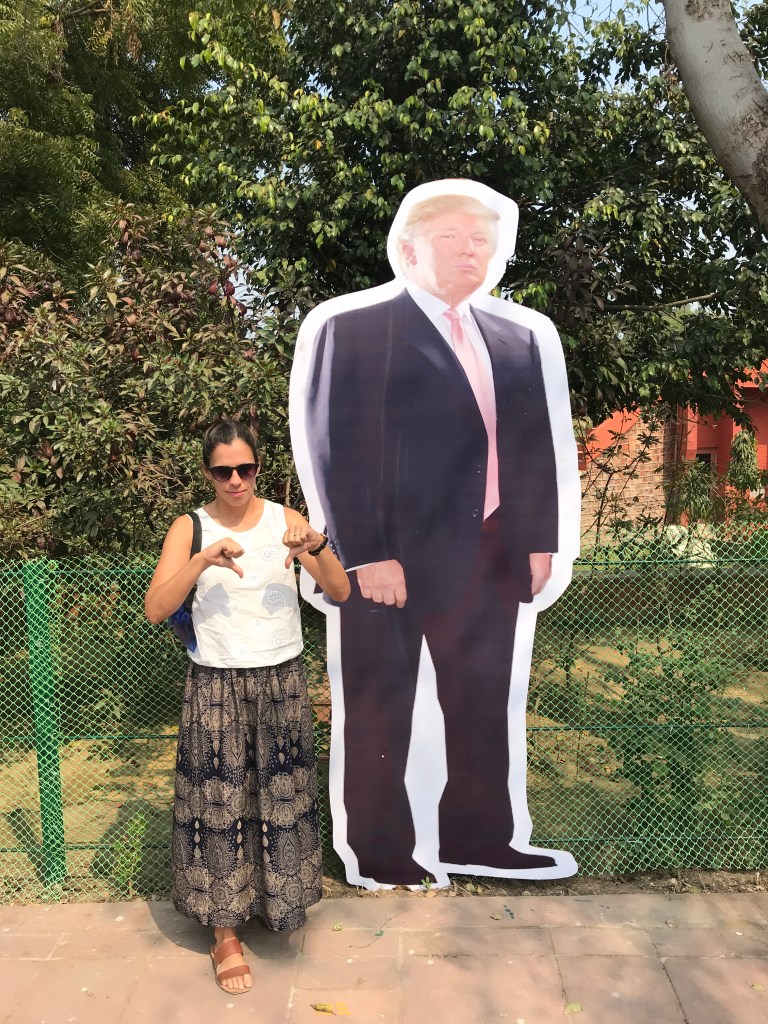
After thumbs down pictures with Trump, we entered the Taj Mahal complex. Our first glimpse of Taj itself was magical; it’s hard not to be impressed by the architectural magnificence and opulence of the entire grounds. Every human body paled into insignificance in the sheer size of the building.
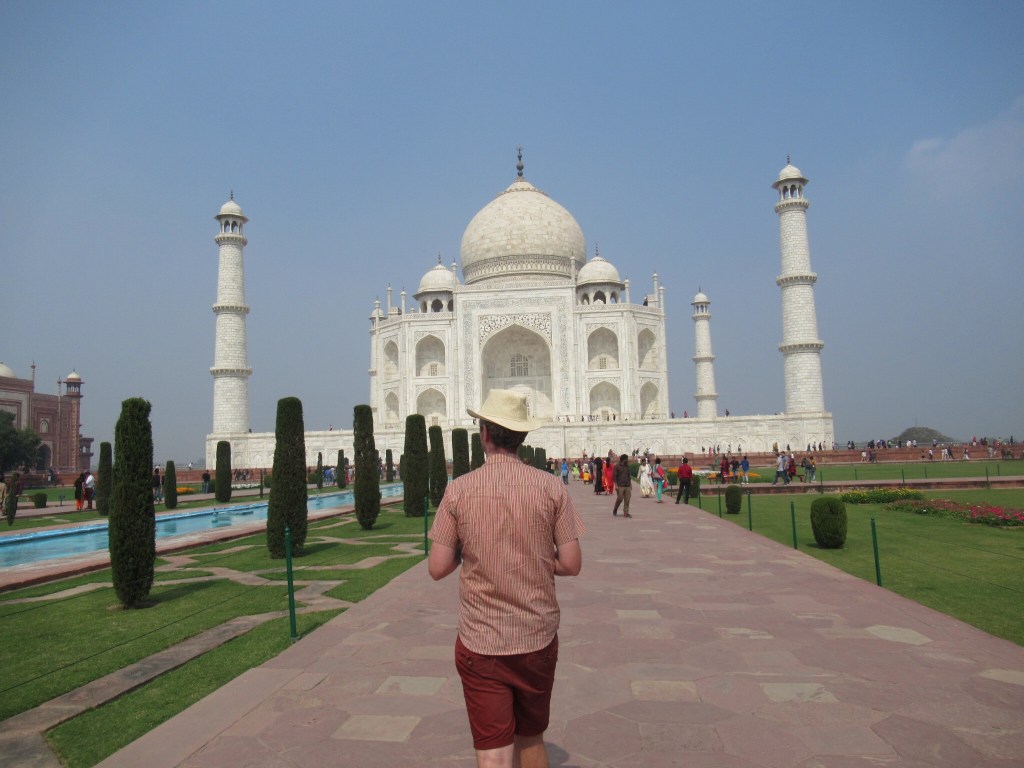
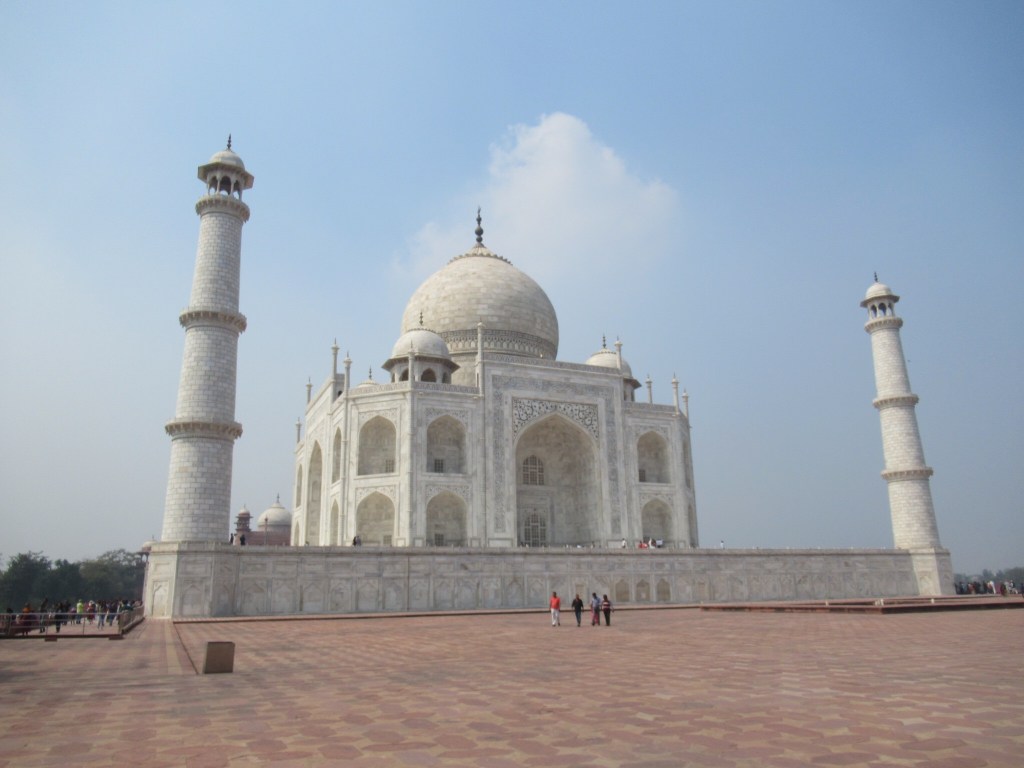
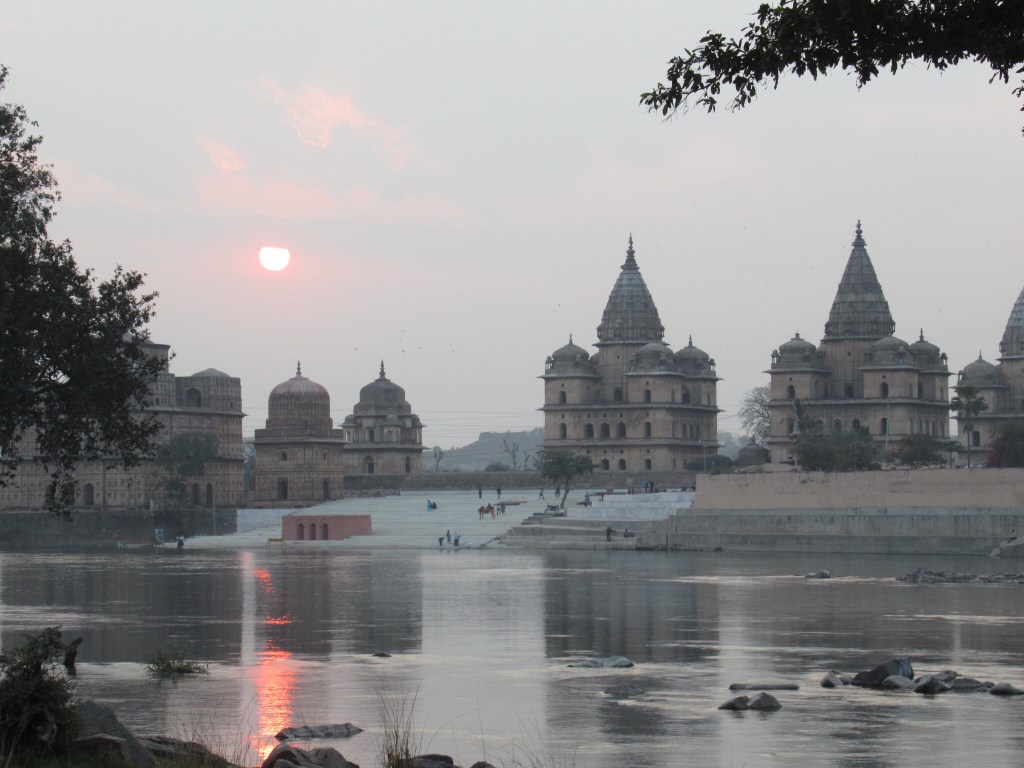
After plenty of photos with most angles of the Taj, we moved south to Gwalior and onwards to Orchha, a small town near Jhansi. The word ‘Orchha’ means ‘hidden palace.’ The town itself lives up to its name, slightly off the tourist trail, filled with breathtaking palaces, built in the sixteenth and seventeenth century. By this point, after a couple of weeks on the Rajasthan Tourist Ramble, we were ready for somewhere with a more relaxed feel. Here in Orchha, we found exactly what we needed. We were able to walk freely alongside the Betwa River, amongst the fields, marvelling at the glory of the buildings with not a car horn to be heard.
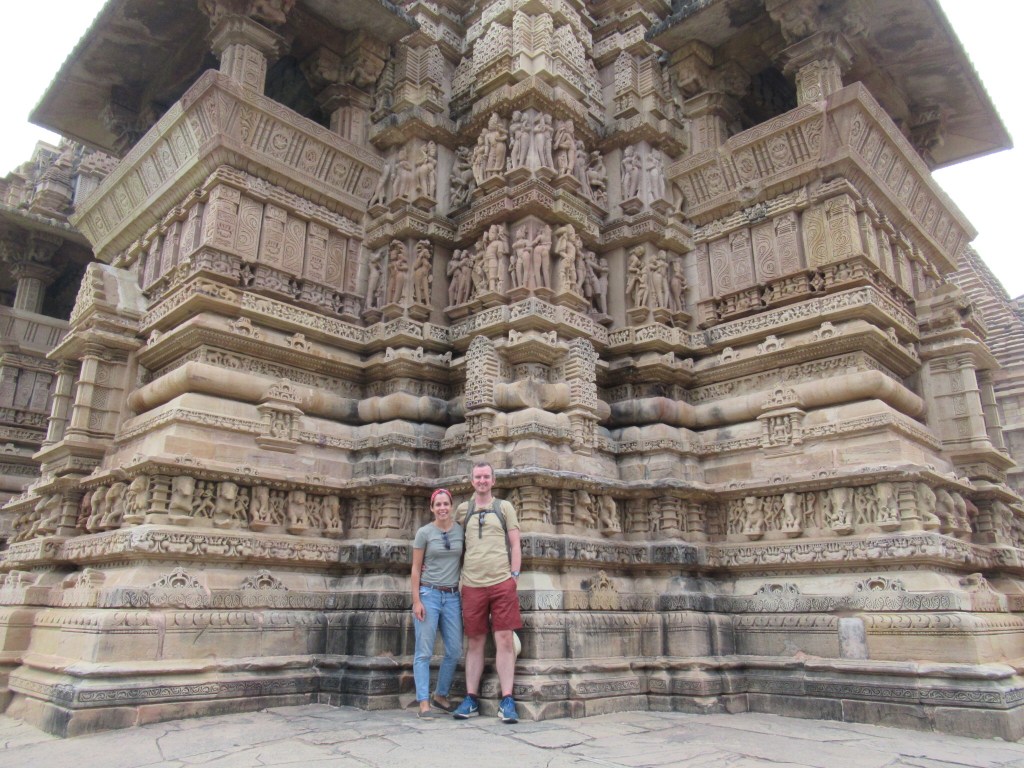
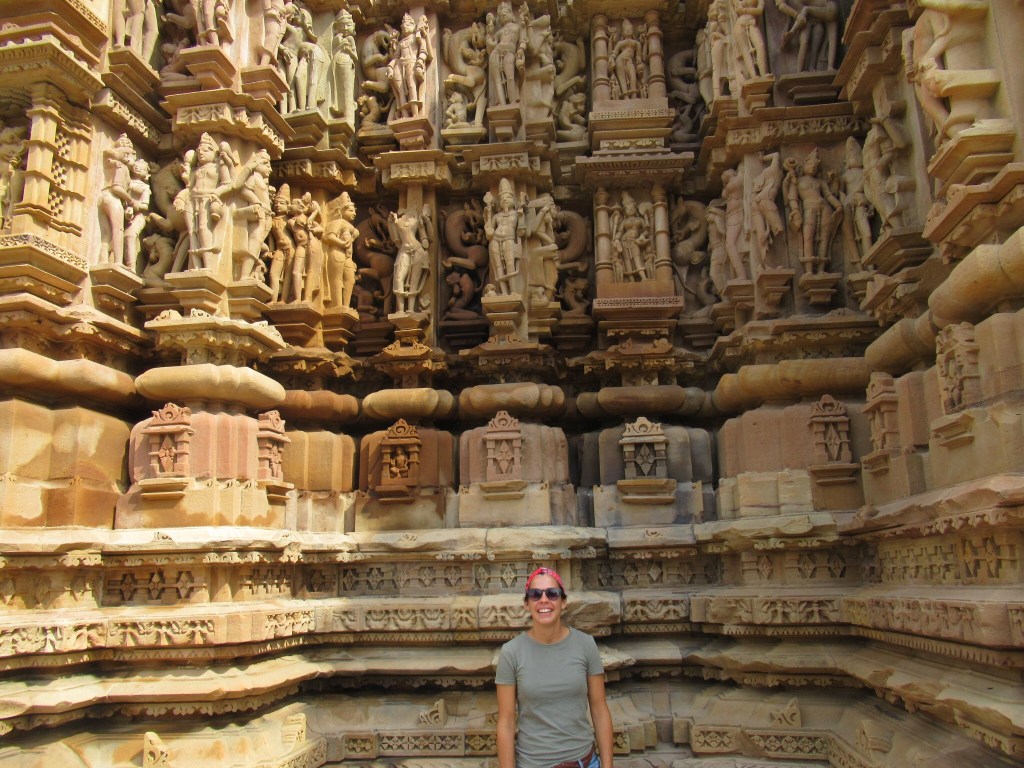
After a relaxing two nights in Orchha, we headed in a Tuk Tuk back to Jhansi station for our final Indian train ride to Khajuraho. We settled into our sleeper pod for a long journey. It was dark when we rolled into Khajuraho and we were met by our Airbnb host in yet another Tuk Tuk. After a night’s sleep and another fairly bland breakfast, we entered the famous Khajuraho temple complex and were instantly impressed. The temples are famous for their intricate carvings and erotic symbolism. They have been exquisitely preserved and offer a lot to marvel, laugh and gasp at! We had to head off to the airport quickly, so we went back to base and caught a tuk tuk to the airport, heading to our final Indian destination.
The journey started out rocky thanks to a bizarre checking procedure whereby our bags were wrapped, locked and tied before being dropped at the counter. The agent then said we needed to remove one kilo from each bag unless we wanted to be charged an unclear amount of money. Importantly, we were assured that this efficient process was in place in over 25 Indian airports. This queued a cumbersome process of removing items from a vacuum sealed, tied up bag, all in slightly grumpy fashion.
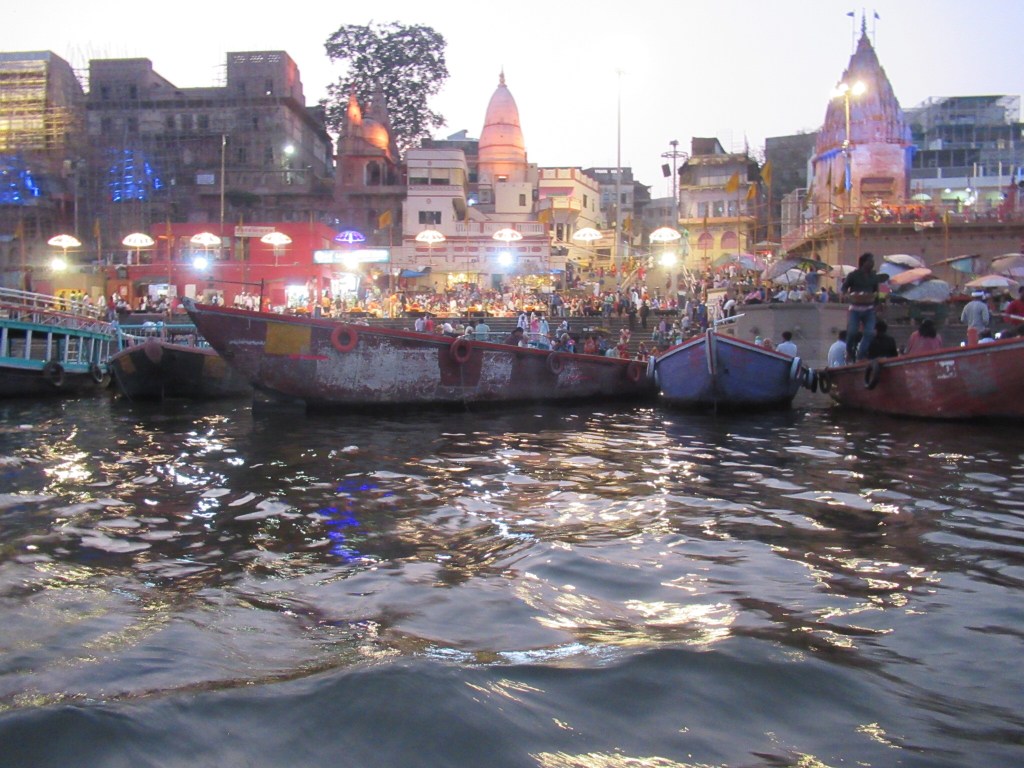
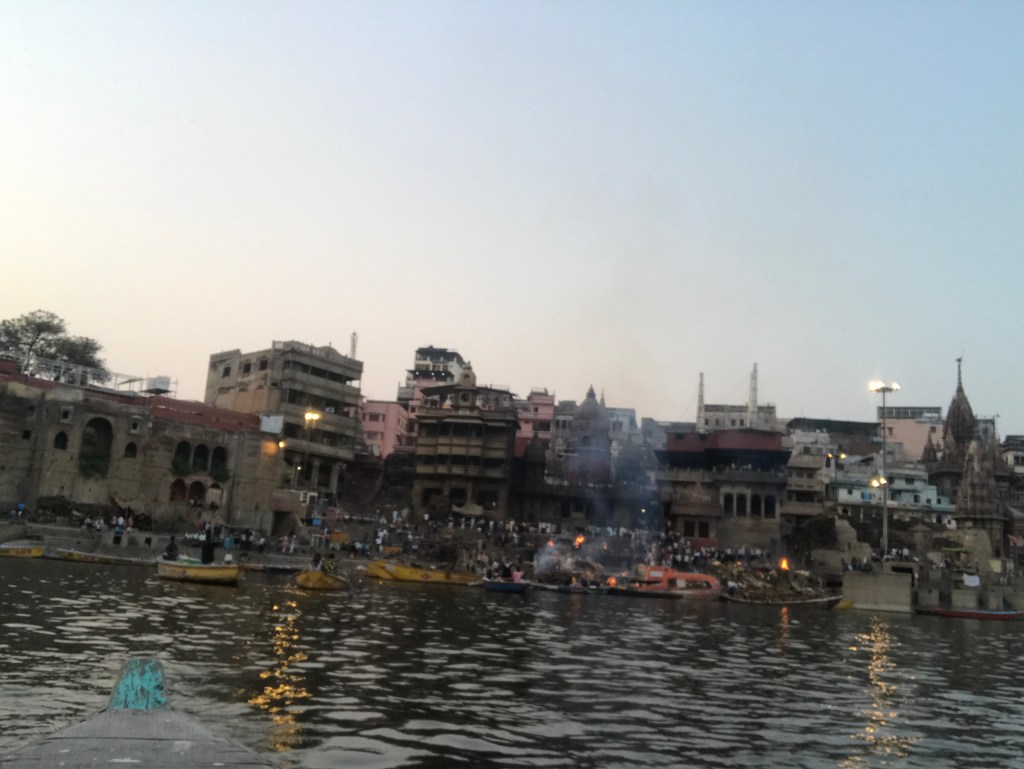
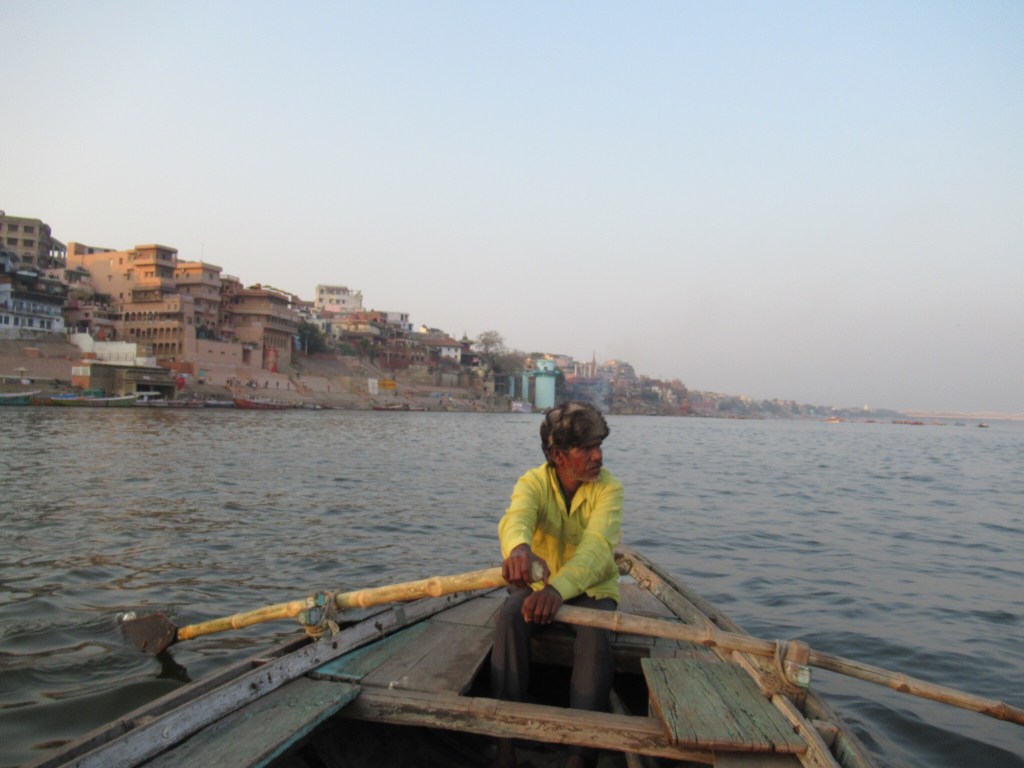
Once we’d made it to Varanasi, we eased back into a familiar India chaos. On the first evening we stumbled upon thousands of people watching the famed River Worship ceremony. We thought that maybe this was a major festival drawing unprecedented crowds; mistaken, it was an every night occurrence community gathering. We had been warned about Varanasi: “not for the faint hearted” said lonely planet. While accurate, we were ready for it and we absorbed the vibrant colours, beeping horns and crammed markets. We strolled along the ghats, dodging dogs and cows, and observed the very public Hindu cremation ceremonies. This was, without a doubt, the most overwhelming, foreign and strangely beautiful ritual we had the privilege of witnessing while traveling. The chaos of Varanasi persisted while, hour after hour, more bodies we brought down to fires along the river for cremation in a deliberately public ceremony. The final evening, we took a boat along the Ganges and saw, from the peaceful waters, everything we had been walking through: the ghats, the burning ceremonies, the river worship crowds, and realised how lucky we’d been to experience this vibrant Holy city as the finale to our passage through India. We were grateful for everything we’d experienced in this diverse country and ready for our early morning flight to India’s mountainous neighbour, Nepal.

 The wondering wanderers